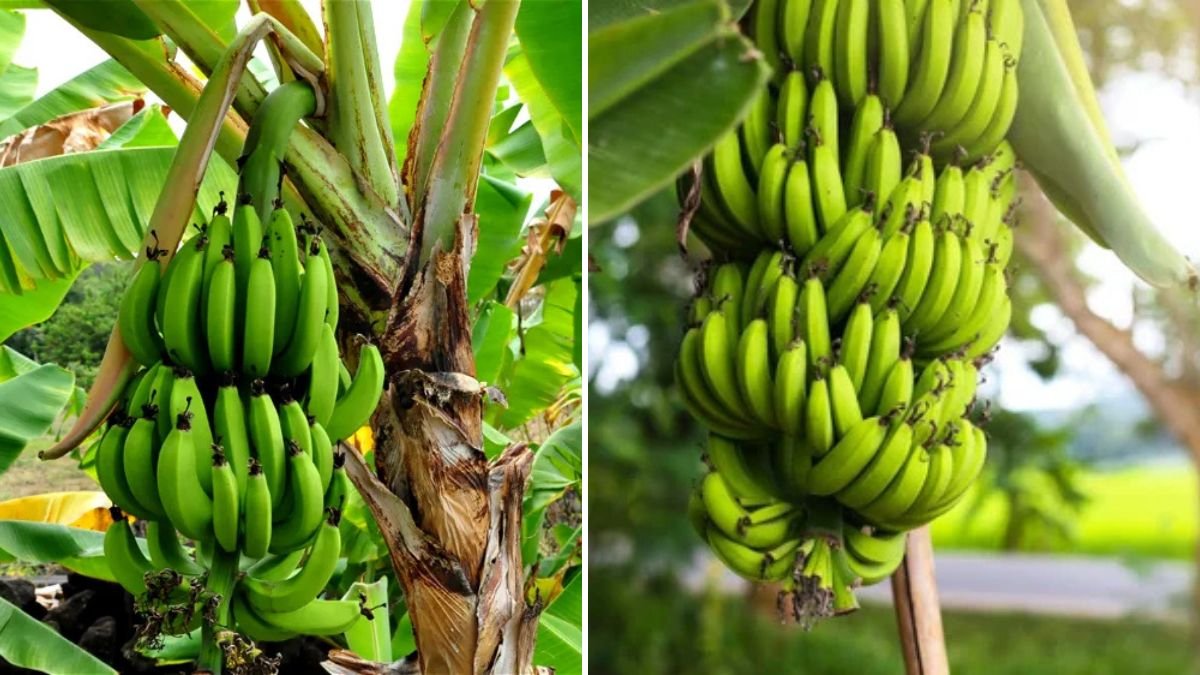
Banana (Musa spp.) is one of the most widely consumed and versatile fruits in the world. Known for its sweet taste, energy-rich content, and nutritional benefits, banana is a staple in tropical and subtropical regions. Growing banana trees in your garden or farm can provide a continuous supply of fresh fruit, reduce grocery costs, and even enhance soil health.
While bananas are often associated with large commercial plantations, growing them at home or in small orchards is easier than most people think. The key lies in proper propagation. In this guide, we will explore how to grow banana trees from bananas using suckers, tissue culture, and seeds, with expert tips for ensuring strong growth, high yield, and healthy plants.
Why Proper Banana Propagation Matters
Propagation is the foundation for healthy banana plants and consistent fruit production. It ensures:
- Faster growth: Strong root systems develop early, allowing plants to thrive.
- True-to-type plants: Some propagation methods ensure the plant is genetically identical to the parent.
- High yield: Well-propagated plants produce abundant fruit.
- Disease resistance: Healthy propagation reduces the risk of pests and fungal infections.
Choosing the right method depends on your resources, goals, and scale of cultivation.
Method 1: Growing Banana Trees from Suckers
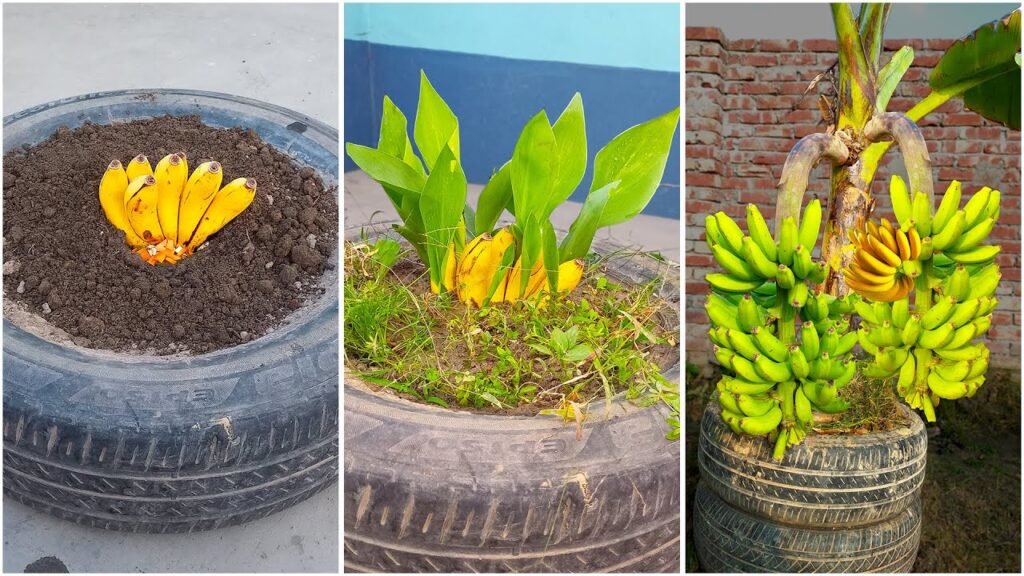
Suckers, also called pups, are the most common method for home gardeners. These are small offshoots that grow around the base of a mature banana plant.
Step 1: Identify Healthy Suckers
- Choose suckers that are 3–4 months old and at least 3–4 feet tall.
- Select those with healthy leaves and firm stems.
- Avoid weak or diseased suckers, as they may carry pathogens.
Step 2: Separate the Sucker
- Use a sharp, clean knife to cut the sucker from the mother plant.
- Make sure the sucker has some roots attached.
- If roots are minimal, it can still grow, but rooting will take longer.
Step 3: Prepare the Planting Site
- Bananas require well-drained, fertile soil with a pH of 5.5–7.0.
- Choose a sunny location with at least 6 hours of sunlight per day.
- Dig a hole 1–1.5 feet deep and wide enough to accommodate the roots.
Step 4: Plant the Sucker
- Place the sucker in the hole.
- Fill the hole with a mixture of garden soil and compost.
- Firm the soil around the base and water thoroughly.
Step 5: Care After Planting
- Water regularly to maintain moist soil.
- Apply organic mulch around the base to conserve moisture and suppress weeds.
- Fertilize with compost or balanced NPK fertilizer every 2–3 months.
Pros:
- True-to-type plant, identical to the parent
- Simple and inexpensive
Cons:
- Requires access to mature banana plants
- Some suckers may take longer to establish
Method 2: Growing Banana Trees from Tissue Culture
Tissue culture is a modern propagation method used commercially to produce large numbers of disease-free banana plants.
Step 1: Obtain Tissue Culture Plantlets
- Purchase plantlets from a certified nursery or laboratory.
- Tissue culture plants are genetically uniform and free from viruses.
Step 2: Acclimatization
- Place plantlets in a shaded nursery area.
- Maintain high humidity and indirect sunlight for 2–3 weeks.
Step 3: Planting
- Prepare holes 1–1.5 feet deep with fertile, well-draining soil.
- Transplant the plantlets carefully, avoiding root damage.
- Water immediately and keep soil consistently moist.
Step 4: Care
- Fertilize with compost or balanced fertilizer.
- Mulch around the base to retain moisture.
- Protect young plants from strong winds.
Pros:
- Produces disease-free plants
- Faster establishment
- Uniform growth and fruiting
Cons:
- Requires purchasing plantlets from a nursery
- Higher initial cost than suckers
Method 3: Growing Banana Trees from Seeds
Most cultivated banana varieties are parthenocarpic and produce seedless fruits. However, wild bananas have seeds, and growing from seeds is possible.
Step 1: Extract Seeds
- Collect seeds from fully ripe wild banana fruits.
- Wash seeds thoroughly to remove pulp.
Step 2: Pre-Treatment
- Soak seeds in water for 24–48 hours to soften the seed coat.
- Scarify the seed by lightly rubbing it with sandpaper to improve germination.
Step 3: Prepare the Planting Medium
- Use a mix of garden soil, sand, and compost (2:1:1).
- Plant seeds 1–2 cm deep in pots or trays.
Step 4: Care
- Keep soil consistently moist.
- Place in a bright area with indirect sunlight.
- Germination can take 3–8 weeks, depending on seed quality.
Step 5: Transplanting Seedlings
- Transplant seedlings into larger pots or directly into the field once they reach 15–20 cm in height.
- Maintain spacing of 6–8 feet between banana plants.
Pros:
- Low cost and easy to collect seeds
- Can grow wild banana varieties
Cons:
- Longer time to fruit
- Seedlings may not be identical to parent plant
Post-Propagation Care for Banana Trees
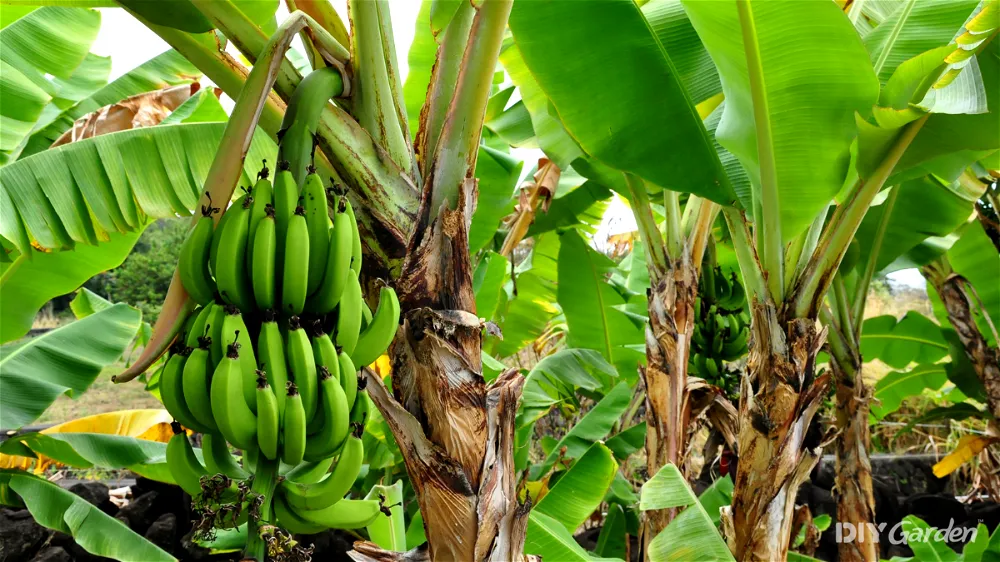
Proper care is crucial for young banana plants to establish and grow into healthy fruiting trees.
1. Watering
- Bananas need frequent watering, especially during dry periods.
- Avoid waterlogging, which can cause root rot.
- Drip irrigation or regular deep watering is recommended.
2. Fertilization
- Apply organic manure, compost, or vermicompost regularly.
- Use NPK fertilizer (10:10:10) to support vegetative growth and fruiting.
- Fertilize every 2–3 months for optimal results.
3. Mulching
- Use straw, dry leaves, or grass to retain moisture and suppress weeds.
- Mulching also improves soil fertility over time.
4. Pest and Disease Management
- Common pests: aphids, nematodes, mealybugs, banana weevils
- Common diseases: Panama disease, Sigatoka, bacterial wilt
- Preventive sprays with neem oil or biopesticides can reduce infestation.
5. Pruning and Maintenance
- Remove old, damaged, or dead leaves regularly.
- Remove suckers if you want the main plant to produce more fruit.
- Support heavy fruit bunches with bamboo stakes if necessary.
When Will Banana Trees Fruit?
| Propagation Method | Time to First Fruit |
|---|---|
| Suckers | 9–12 months |
| Tissue Culture | 8–10 months |
| Seeds | 18–24 months |
Bananas are fast-growing plants. With proper care, suckers and tissue-cultured plants can produce fruit within the first year, making them ideal for home gardeners.
Expert Tips for Successful Banana Propagation
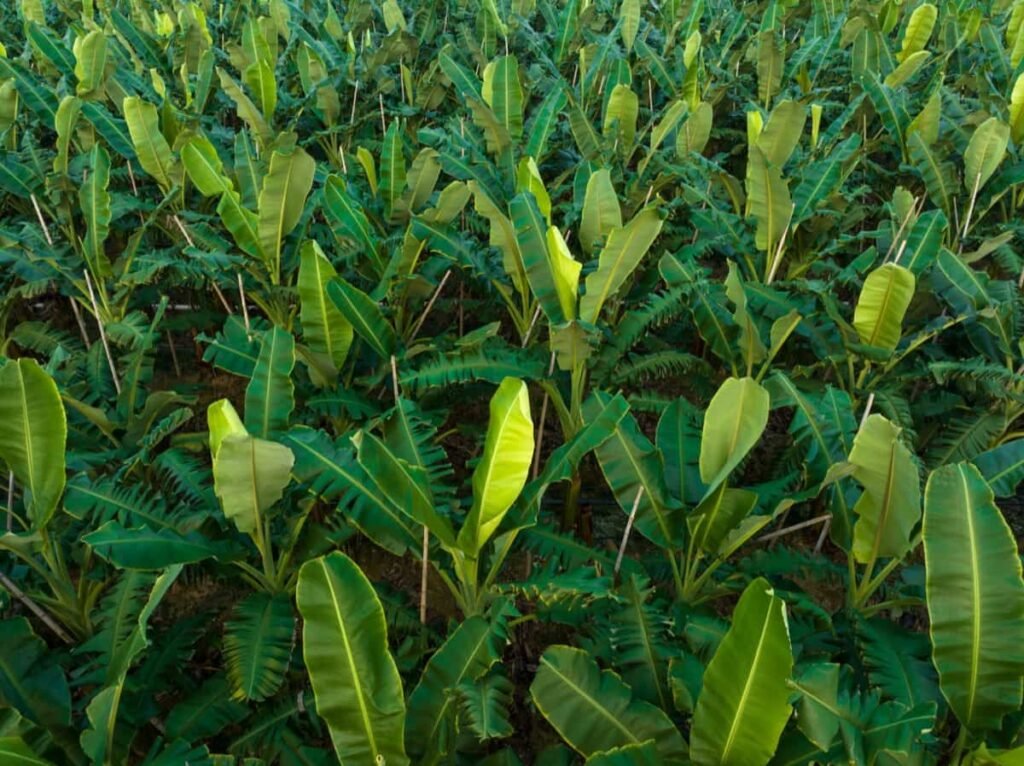
- Choose a sunny, well-drained location for planting.
- Always use healthy suckers or tissue-cultured plantlets.
- Keep soil moist but not waterlogged.
- Apply organic compost regularly to encourage strong growth.
- Mulch around young plants to conserve moisture.
- Remove excess suckers to focus energy on main plants.
- Monitor for pests and diseases early and take preventive action.
Conclusion
Growing banana trees from bananas is simple, cost-effective, and highly rewarding. Whether you use:
- Suckers: Fast, true-to-type, ideal for home gardens
- Tissue Culture: Disease-free, uniform growth, perfect for orchards
- Seeds: Low-cost, suitable for wild varieties and experimentation
By following the step-by-step methods and expert tips in this guide, you can enjoy healthy banana trees with abundant, sweet fruits in your garden or orchard. With consistent care, proper fertilization, and pest management, your banana plants will thrive and produce fruit year after year, making your garden both productive and lush.