Mango trees are often called the “king of fruits,” beloved for their sweet aroma, juicy flesh, and magnificent beauty. In many tropical and subtropical regions, mango trees are more than just fruit-bearing plants—they are symbols of prosperity, tradition, and natural abundance. While growing mango trees from seeds is common, seed-grown trees often take many years to fruit and may not retain the quality of the parent fruit.
This is where mango tree grafting becomes incredibly valuable. Grafting allows gardeners and farmers to propagate high-quality mango varieties quickly, ensuring consistent fruit quality, faster fruiting, and stronger plants. Whether you’re a home gardener or a commercial grower, mastering grafting techniques can transform your mango cultivation experience.
In this comprehensive guide, we will explore what mango grafting is, why it is important, the most reliable techniques, step-by-step procedures, and essential care tips to ensure successful grafting.
What Is Mango Tree Grafting?
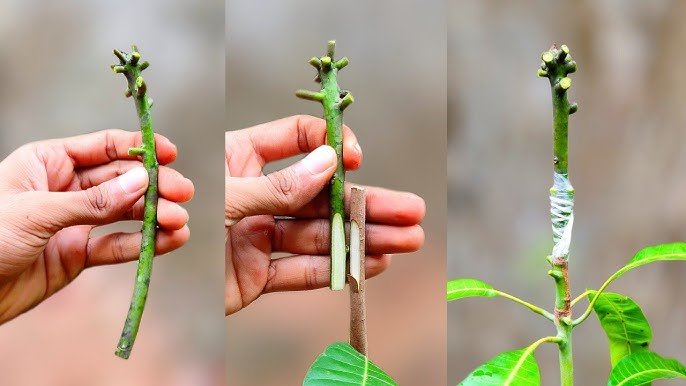
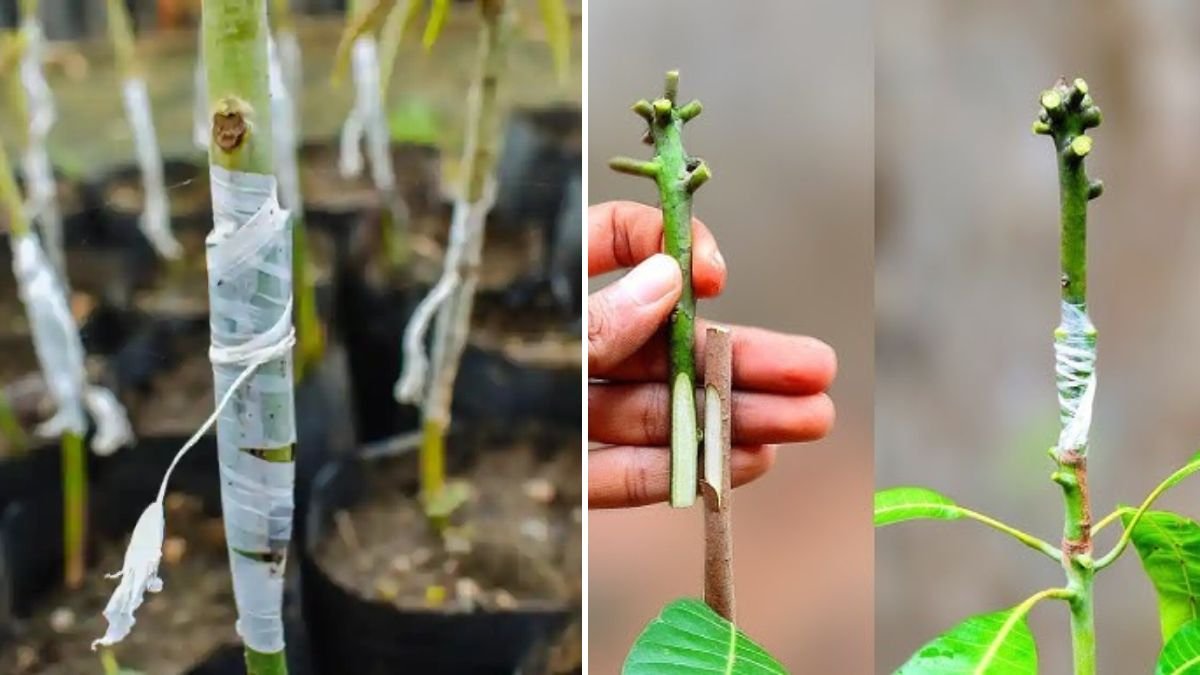
Grafting is a horticultural technique in which two plant parts—the rootstock and the scion—are joined together so that they grow as one plant.
- Rootstock: Provides the root system, disease resistance, and adaptability.
- Scion: A cutting from a desired mango variety that produces high-quality fruit.
When joined properly, the tissues fuse, and the plant continues growing with the characteristics of the scion while being supported by the rootstock.
Grafting allows gardeners to:
- Preserve superior varieties
- Speed up fruit production
- Improve plant vigor
- Reduce genetic variability
- Control tree size
- Enhance disease resistance
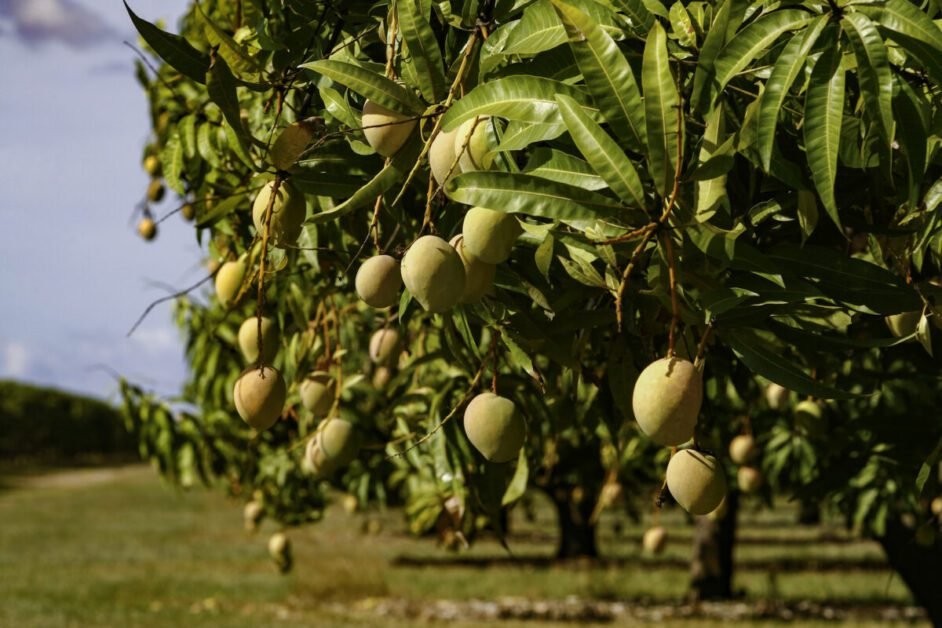
Grafted mango trees usually bear fruit in 2–4 years, compared to seed-grown trees that may take 6–10 years.
Why Mango Grafting Is Important
Mango grafting is widely practiced because it offers several advantages:
1. Faster Fruiting
Grafted trees flower and fruit much earlier than seed-grown trees.
2. Uniform Fruit Quality
Every grafted tree produces fruits with the same taste, aroma, and texture as the parent variety.
3. Disease Resistance
Using a strong rootstock improves tolerance to soil-borne diseases.
4. Stronger Growth
Rootstocks often provide better anchoring, drought tolerance, and nutrient uptake.
5. Space Efficiency
Grafted trees can be trained to grow compactly, making them ideal for small gardens.
Common Mango Grafting Methods
Several techniques are used to graft mango trees. The most popular include:
- Side Veneer Grafting (Most Common & Reliable)
- Cleft Grafting
- Whip Grafting
- Approach Grafting
- Bud Grafting (T-Budding)
Among these, side veneer grafting is considered the best for mango because it has the highest success rate and works well with young rootstocks.
Below we will focus on the most effective method—side veneer grafting.
Method 1 — Side Veneer Grafting (Best Method)
Materials Needed
- Healthy mango rootstock (6–12 months old)
- Scion wood from a high-quality mango variety
- Sharp grafting knife
- Grafting tape or rubber bands
- Paraffin or grafting wax
- Clean cloth
Step-by-Step Procedure
1. Select a Healthy Rootstock
Choose a straight stem with:
- 0.5–1 cm diameter
- No pests
- Fresh growth
Cut the stem height at around 15–20 cm.
2. Prepare the Scion
Choose a scion with:
- Mature buds
- Healthy bark
- No flowers
- Length: 8–10 cm
Make a slanted cut at the base.
3. Make a Side Cut on Rootstock
Create a shallow, vertical cut (2–3 cm) on one side of the rootstock.
The cut should expose the cambium layer.
4. Insert the Scion
Slide the prepared scion into the cut.
Ensure:
- Cambium layers touch
- Scion fits firmly
- No gaps
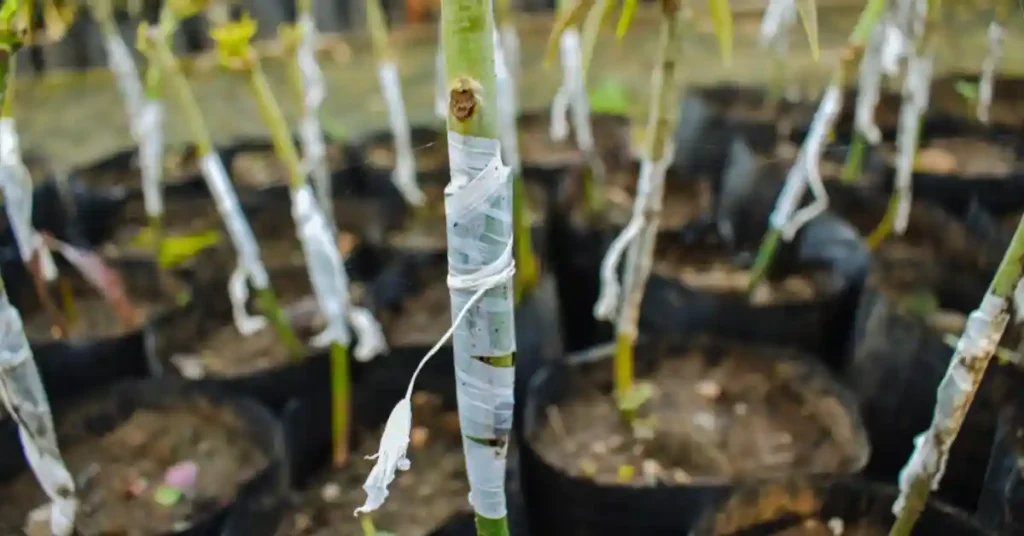
5. Secure the Graft
Wrap tightly with:
- Grafting tape
- Polyethylene strip
- Rubber band
This holds the tissues together.
6. Apply Grafting Wax
Seal the area with wax to:
- Prevent drying
- Reduce infection
- Maintain humidity
7. Provide Shade
Place the plant in:
- Partial shade
- Indirect sunlight
Avoid full sun until the graft heals.
Healing Time
Grafts usually heal in 2–4 weeks.
Successful signs:
- Bud swelling
- New shoot growth
- Healthy green color
Method 2 — Cleft Grafting (Useful for Thick Rootstocks)
Cleft grafting is used when the rootstock is thicker.
Steps
- Cut the rootstock vertically
- Split it gently
- Insert two scions
- Tie firmly
- Seal with wax
Method 3 — T-Budding (Simple for Beginners)
Bud grafting uses a single bud from the scion.
Steps
- Cut a “T” shape on rootstock
- Remove bark
- Insert bud
- Wrap
- Wait 2–3 weeks
Best Time for Mango Grafting
The ideal season is:
- Late winter to early summer
- February to May
During this time:
- Sap flow is optimal
- Healing is faster
- Infection risk is lower
Avoid rainy seasons.
Care After Grafting
Proper aftercare determines success.
1. Provide Shade
Use a shade net or place plants under partial sunlight.
2. Keep Moisture Balanced
Do not overwater.
3. Remove Weak Grafts
Remove any dry or unhealthy grafts.
4. Support the Shoot
Use sticks to prevent wind damage.
5. Remove Competing Shoots
Cut off shoots below the graft union.
When Will the Grafted Mango Tree Bear Fruit?
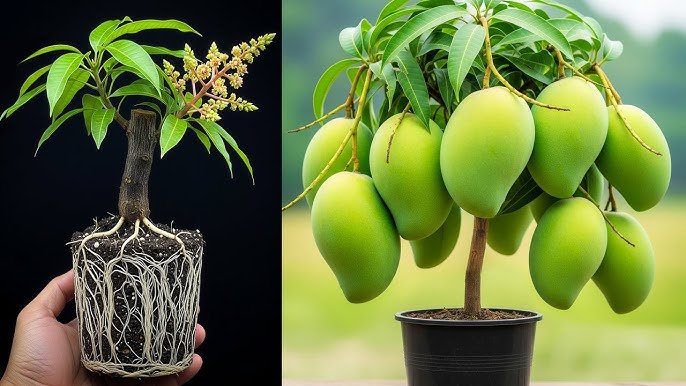
A grafted mango tree usually fruits within:
- 2–3 years
Sometimes even earlier if:
- Nutrients are adequate
- Sunlight is good
- Pruning is proper
Pruning for Better Yield
After grafting:
- Remove excess shoots
- Shape the canopy
- Encourage branching
- Maintain height
Proper pruning increases fruit size and number.
Common Problems & Solutions
1. Graft Failure
Cause: Poor cambium contact
Solution: Re-graft with clean cuts
2. Drying of Scion
Cause: Lack of humidity
Solution: Wrap tightly + use wax
3. Infection
Cause: Dirty tools
Solution: Sterilize tools
4. Weak Growth
Cause: Nutrient deficiency
Solution: Apply compost + NPK
Advantages of Grafted Mango Trees
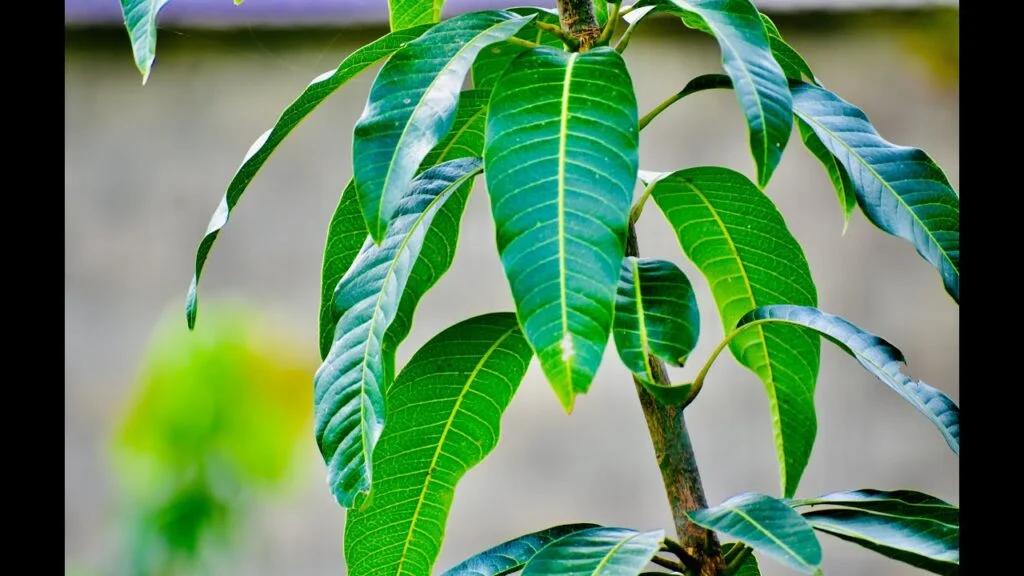
- Earlier fruiting
- Consistent quality
- Higher yields
- Stronger roots
- Better disease resistance
- Compact growth
Conclusion
Mango tree grafting is an essential skill for gardeners who want fast-growing, high-yielding trees with consistent fruit quality. By joining a strong rootstock with a superior scion, grafting ensures that every tree produces delicious fruits similar to the original variety.
Among the various techniques, side veneer grafting remains the most reliable and widely used method, offering high success rates and strong plant development.
With proper technique, clean tools, careful aftercare, and patience, you can successfully graft mango trees and enjoy fresh, aromatic fruits much sooner than traditional seed propagation.
Start grafting today, and experience the beauty, fragrance, and sweetness of homegrown mangoes produced from trees you cultivated with your own hands.