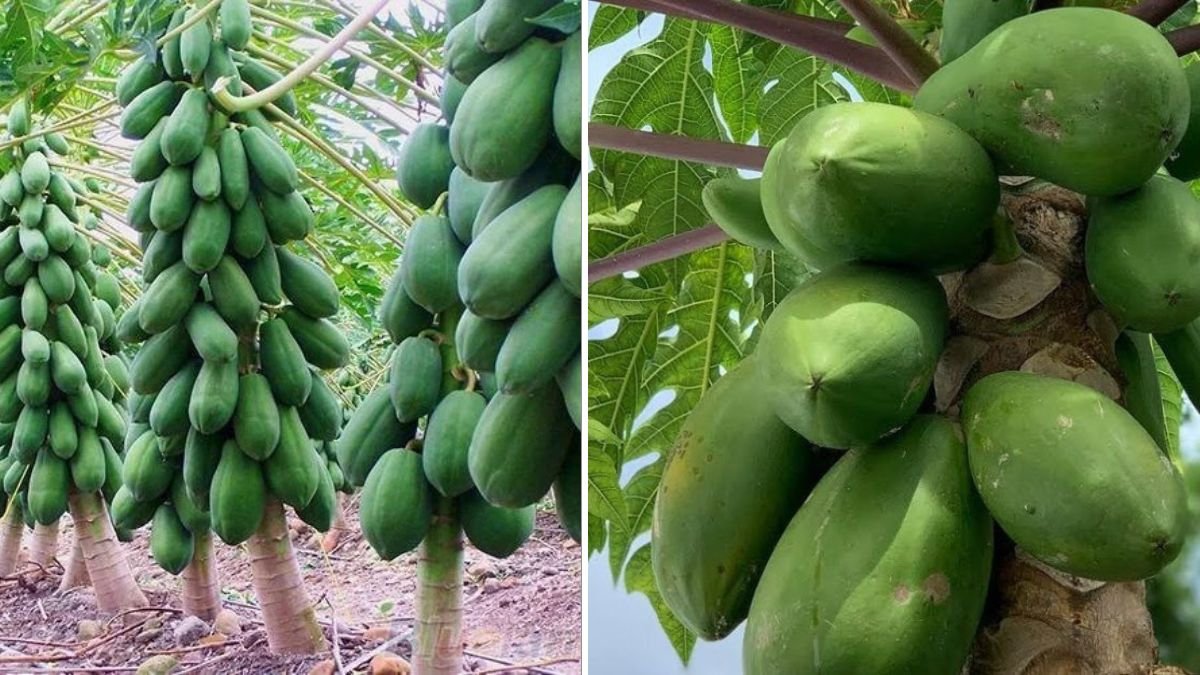
Papaya is one of the most delicious and nutrient-rich tropical fruits enjoyed around the world. Its sweet flavour, soft texture, and high vitamin content make it a favourite in households, juices, and desserts. Growing a papaya tree at home not only gives you fresh fruit but also adds beauty and greenery to your garden.
Many beginners think papaya trees are difficult to grow, but the truth is the opposite — papaya is one of the easiest fruit trees you can grow at home. With the right soil, sunlight, and care, you can grow a healthy papaya tree and start harvesting fruits in as little as 8–12 months.
In this detailed 1200-word guide, you will learn:
How to grow papaya from seeds
How to grow papaya in pots or soil
Soil and fertilizer secrets
Watering techniques
How to speed up fruiting
How to prevent pests
How to prune & maintain papaya
Tips used by experts
Let’s begin your papaya growing journey!
1. Understanding Papaya Trees

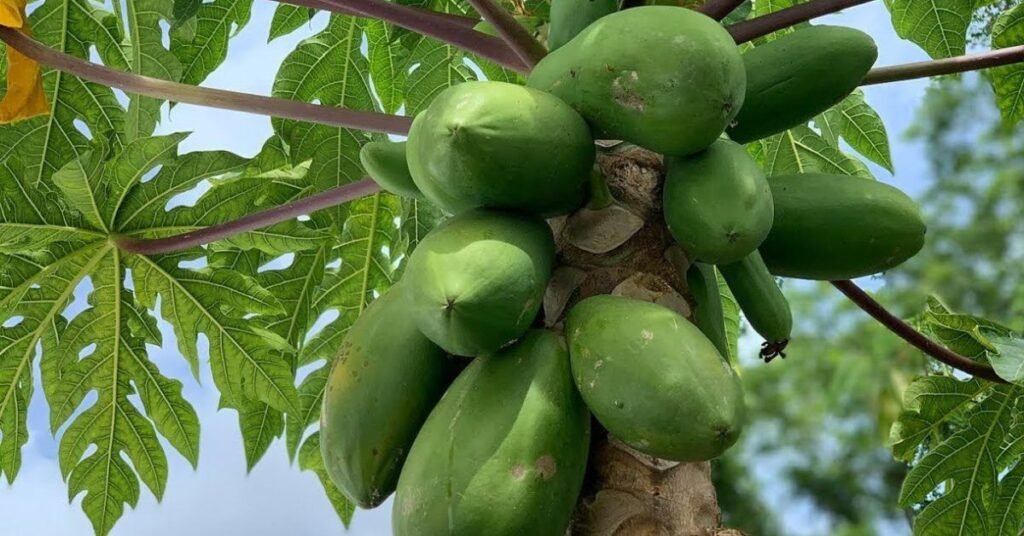
Papaya (Carica papaya) is a fast-growing tropical plant with:
- A soft, hollow trunk
- Large lobed leaves
- Fast fruiting ability
- High sensitivity to overwatering
- Preference for warm climates
Papaya grows best in:
- Full sunlight
- Warm temperatures (20–35°C)
- Well-drained soil
- Moderate watering
Because the plant grows quickly, it is perfect for home gardeners.
2. Growing Papaya From Seeds (Easiest Method)
Growing papaya from seeds is simple and fun.
Step 1 — Choose a ripe papaya
Select:
- Fully ripe
- Sweet
- No fungal spots
The seeds inside are the best for germination.
Step 2 — Extract seeds
Scoop seeds and wash them with water to remove pulp.
Step 3 — Dry seeds
Spread seeds on:
- Paper
- Plate
- Cloth
Dry for:
- 1–2 hours
Do not dry too long; seeds lose viability.
Step 4 — Prepare soil
Use a mix:
- Garden soil
- Compost
- Cocopeat
- Sand
Ratio: 2:1:1:1
This mixture drains well and supports fast root growth.
Step 5 — Sow seeds
Plant seeds:
- 1–2 cm deep
- Spaced 5 cm apart
- Lightly cover
Step 6 — Water gently
Keep soil moist, not wet.
Step 7 — Germination
Seeds sprout in:
- 10–20 days
You will see tiny papaya plants emerging.
3. Transplanting Seedlings (Important Step)
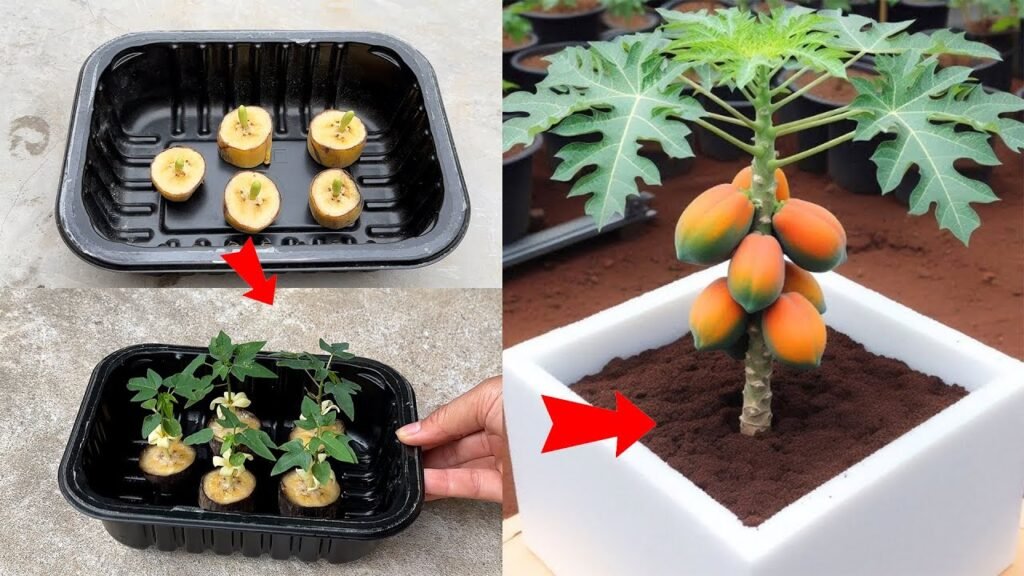
When seedlings reach:
- 20–25 cm height
Transplant them into:
Large pot
Soil bed
Garden plot
Choose the strongest plant because papaya grows tall and needs space.
4. Growing Papaya in Pots (Urban Friendly Method)
If you live in apartments, you can grow papaya in containers.
Pot size:
- Minimum 20–25 inches diameter
- Depth 18–24 inches
Papaya has a long root system, so big pots are essential.
5. Sunlight Requirements
Papaya loves sunlight.
Minimum: 6 hours per day
Ideal: 8–10 hours per day
Sunlight helps:
- Strong stems
- Large leaves
- Early flowering
- Heavy fruiting
Shaded plants:
- Grow slowly
- Become weak
- Bear fewer fruits
6. Watering Guide
Papaya needs consistent moisture but hates waterlogging.
Water when soil feels slightly dry
Keep soil moist
Avoid flooded soil
Avoid dry soil
Tip:
Use drip irrigation or gentle watering.
Overwatering causes:
- Root rot
- Yellow leaves
- Weak growth
Underwatering causes:
- Leaf drop
- Stunted growth
7. Best Soil for Papaya Growth
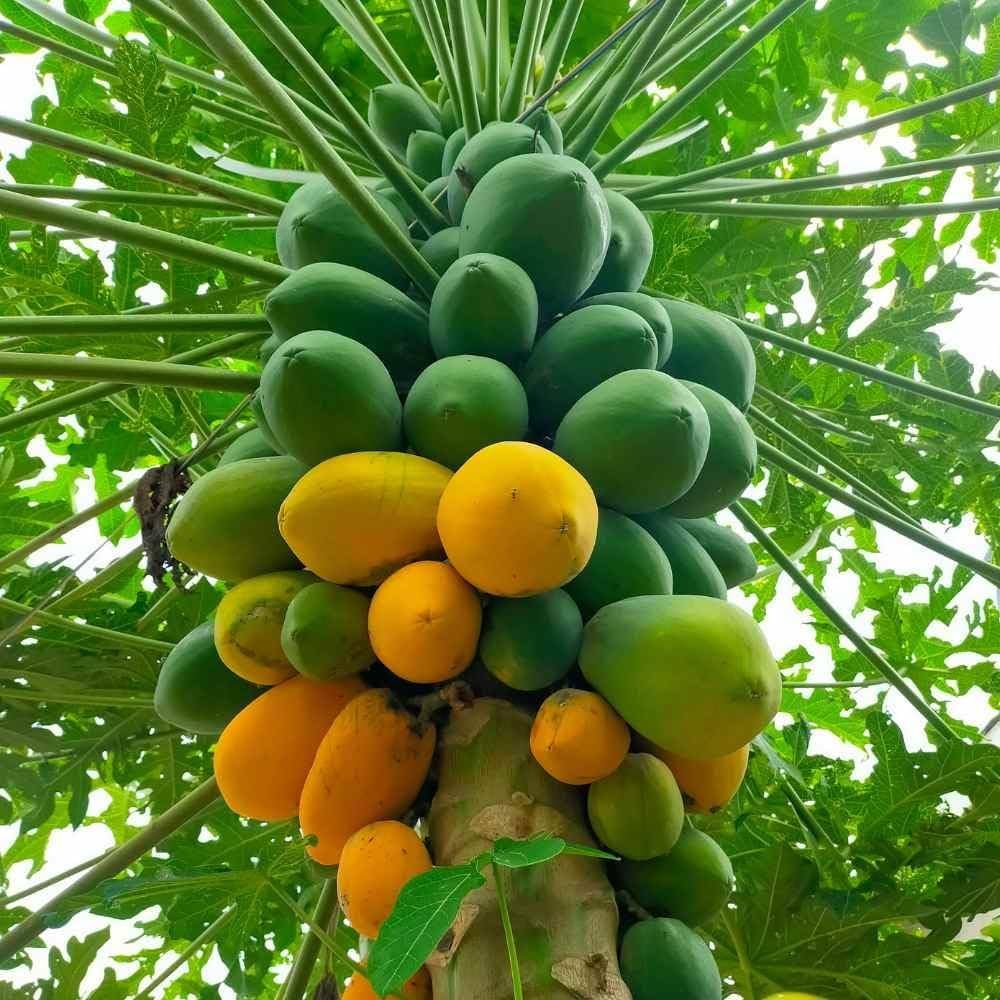
Papaya prefers:
- Loose
- Fertile
- Well-drained
- Slightly acidic soil
Ideal pH:
- 6.0–6.5
Add:
- Compost
- Organic manure
- Cocopeat
- Sand
This improves:
- Aeration
- Water retention
- Nutrient availability
8. Fertilizing for Faster Growth
Papaya is a heavy feeder.
Every 20–30 days:
- Compost
- Vermicompost
- Neem cake
- Fish meal
Every 60 days:
- NPK fertilizer (10-10-10)
- Potassium for fruiting
Micronutrients:
Spray:
- Magnesium
- Iron
- Zinc
Micronutrients help:
- Strong leaves
- Green colour
- Early flowering
9. Pruning Papaya Trees
Papaya doesn’t need heavy pruning, but light trimming helps.
Remove:
- Dead leaves
- Yellow leaves
- Broken stems
Pruning helps:
- Light penetration
- Airflow
- Disease prevention
- Better fruiting
10. Flowering and Fruiting
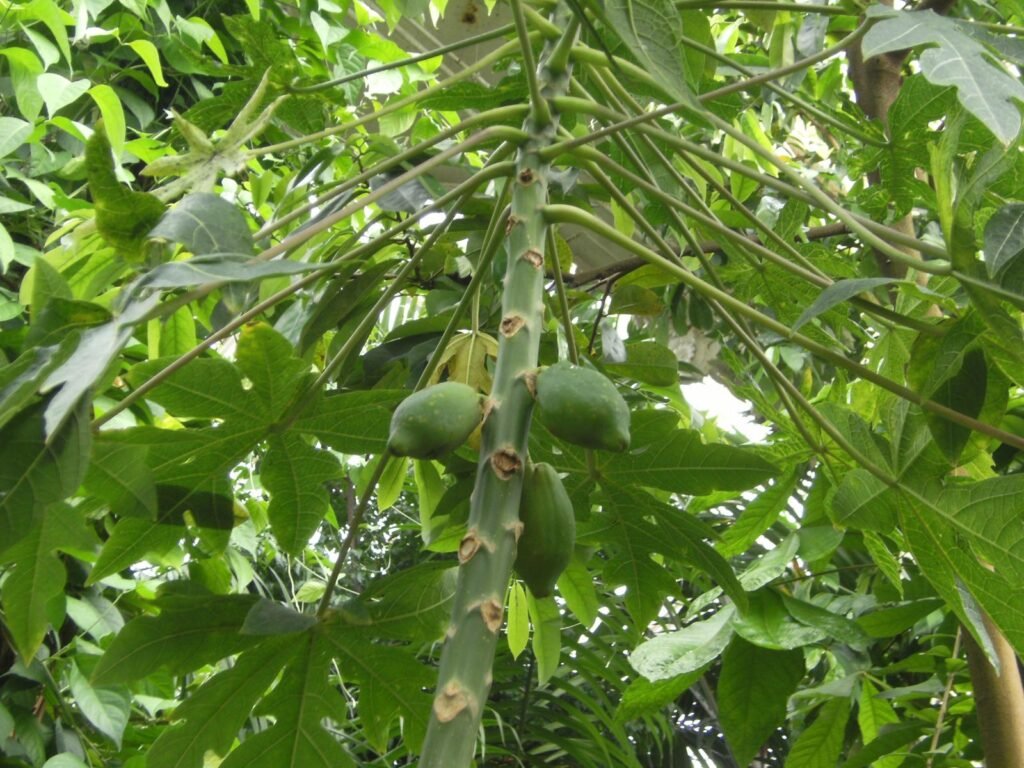
Papaya plants flower between:
- 5–10 months
Flowers can be:
- Male
- Female
- Hermaphrodite
Hermaphrodite plants produce the best fruit
Female plants produce fewer fruits
Male plants produce none
Most gardeners select hermaphrodite varieties.
11. How to Speed Up Papaya Fruiting
To fruit faster:
- Provide full sunlight
- Keep soil warm
- Use potassium-rich fertilizer
- Reduce nitrogen slightly
- Avoid overwatering
- Prune the top gently
These stimulate:
- Flower formation
- Fruit set
- Strong stem
12. Protecting Papaya From Pests
Common pests:
- Aphids
- Whiteflies
- Mealybugs
- Spider mites
- Fruit flies
Natural spray:
- 1 tbsp neem oil
- 1 tsp soap
- 1 litre water
Spray:
- Morning
- Evening
Repeat:
- Every 4–7 days
Neem oil controls most pests organically.
13. Disease Management
Papaya may suffer from:
- Powdery mildew
- Root rot
- Leaf spot
Prevent by:
- Good sunlight
- Proper drainage
- Clean tools
- Avoiding waterlogging
Healthy plants resist diseases naturally.
14. Mulching for Healthy Growth
Mulch helps:
- Maintain moisture
- Reduce heat
- Prevent weeds
- Add nutrients
Use:
- Dry leaves
- Straw
- Coconut husk
- Grass
Keep mulch:
- 2–3 cm thick
- Away from stem
15. How Tall Papaya Trees Grow
Papaya can reach:
- 6–10 feet in pots
- 10–20 feet in soil
They grow fast — sometimes:
- 20–30 cm per week
Because of this, proper support and pruning are essential.
16. Harvesting Papaya Fruits
Harvest when:
- Skin turns yellow
- Fruit softens slightly
- Sweet aroma appears
Cut with:
- Sharp knife
- Clean blade
Papaya ripens faster after picking.
17. Tips for Best Results
Plant during warm months
Provide full sunlight
Use rich organic soil
Fertilize regularly
Water consistently
Protect from pests
Remove damaged leaves
Choose hermaphrodite plants
Keep soil warm
Follow these and you will enjoy abundant fruits.
Conclusion — Growing Papaya at Home Is Simple and Rewarding
Growing a papaya tree at home is one of the easiest ways to enjoy fresh tropical fruit right from your garden. By following proper propagation steps, maintaining good sunlight, providing the right nutrients, and protecting the plant from pests, you can grow a strong, healthy papaya tree that fruits early and abundantly.
Whether you grow it in soil or pots, papaya rewards gardeners with rapid growth and delicious fruits.
Soon you’ll be harvesting sweet, juicy papayas grown by your own hands — a perfect gift from nature.