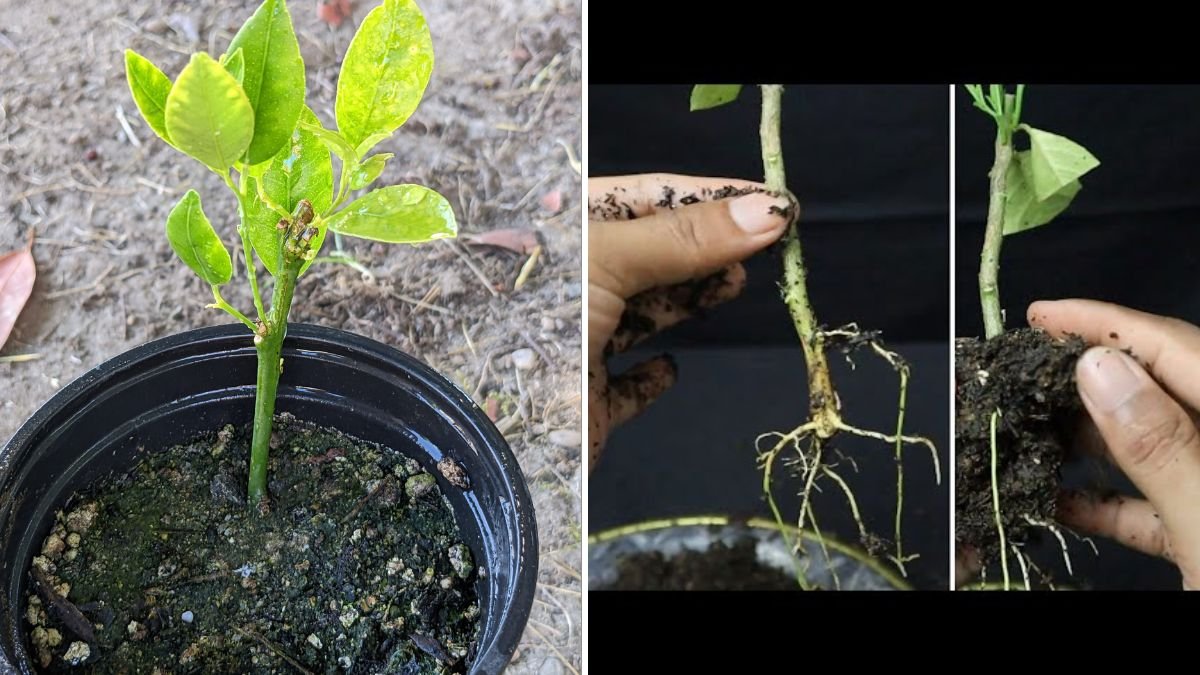
Citrus trees—whether lemon, lime, orange, or sweet lemon—are some of the most rewarding fruit plants to grow at home. The fragrance of their leaves, the beauty of their flowers, and the joy of picking homegrown fruits make them a favorite among gardeners. But did you know you can propagate citrus trees in as little as one month with the right method?
In this detailed 1200-word guide, you’ll learn the quickest, easiest, and most successful technique to root citrus cuttings faster, even if you’re a complete beginner.
Let’s dive into the step-by-step system that guarantees strong, healthy, fast-rooting citrus plants!
Why Propagate Citrus Trees from Cuttings?
Propagation through cuttings is popular because:
✨ Faster Growth – Cuttings grow quicker than seedlings.
✨ Same Fruit Quality – Your new plant will have identical fruit to the mother tree.
✨ Early Fruiting – Cutting-grown citrus often fruits earlier.
✨ Cheap and Easy – No need to buy new plants.
This method works for lemon, lime, orange, tangerine, calamansi, and sweet lemon (mosambi).
Step 1: Choose the Right Cutting (MOST IMPORTANT)
The secret to one-month rooting lies in selecting the perfect cutting.
✔ Best type of cutting:
- Semi-hardwood branch
- Thickness: Pencil size
- Length: 6–8 inches
- Has 2–3 nodes
- Free from pests or disease
Semi-hardwood means the branch is not too soft (green) or too hard (old). This stage has high rooting hormone levels, making it perfect for fast propagation.
✔ Avoid:
- Flowering branches
- Yellowing or damaged shoots
- Very soft new growth
Cut your branch early morning so it stays hydrated.
Step 2: Prepare the Cutting for Rooting
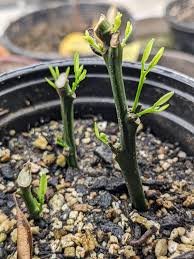
Once you have the right piece, prepare it as follows:
✔ Remove the lower leaves
This reduces water loss.
✔ Keep 2 small leaves at the top
Trim large leaves into half to reduce transpiration.
✔ Make a clean diagonal cut at the bottom
A slanted cut increases the rooting surface.
✔ Optional but powerful:
Lightly scrape the bark (1 cm) on one side of the bottom node
This exposes the cambium layer, helping roots form quickly.
Step 3: Use Rooting Hormone (Natural or Synthetic)
This step boosts success rate up to 95%.
You may use:
Natural options
- Honey
- Aloe vera gel
- Cinnamon + honey paste
- Willow water
Synthetic rooting powders
- NAA
- IBA
Dip the bottom 1 inch of the cutting into your chosen rooting hormone.
Step 4: Prepare the Perfect Fast-Rooting Soil Mix
Citrus cuttings root BEST in light, airy, moist, well-draining mix.
✔ Ideal rooting mix:
- 40% Cocopeat
- 40% Perlite / River Sand
- 20% Garden soil or compost
Why this works:
- Cocopeat keeps moisture
- Perlite/sand prevents rot
- Garden soil provides nutrients
Avoid heavy clay soil—it causes rotting.
Step 5: Plant the Cutting Correctly
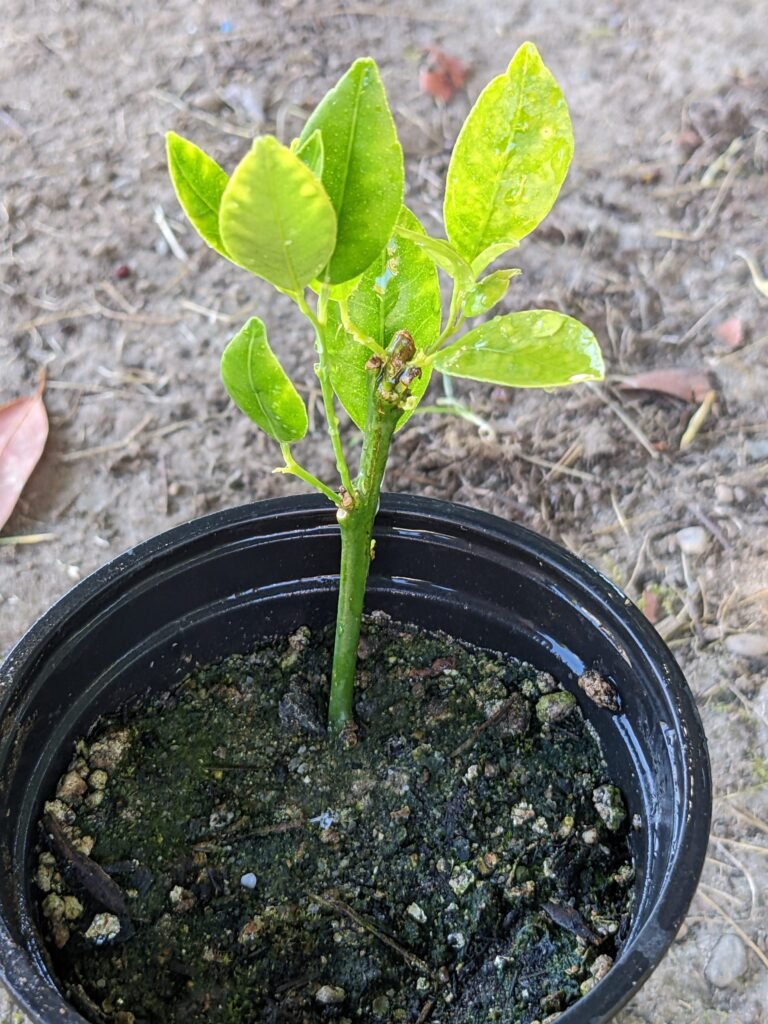
Insert the cutting 2–3 inches deep, ensuring at least one node is buried.
✔ Press the soil gently
This removes air pockets.
✔ Water lightly
Just moisten the mix—not soggy.
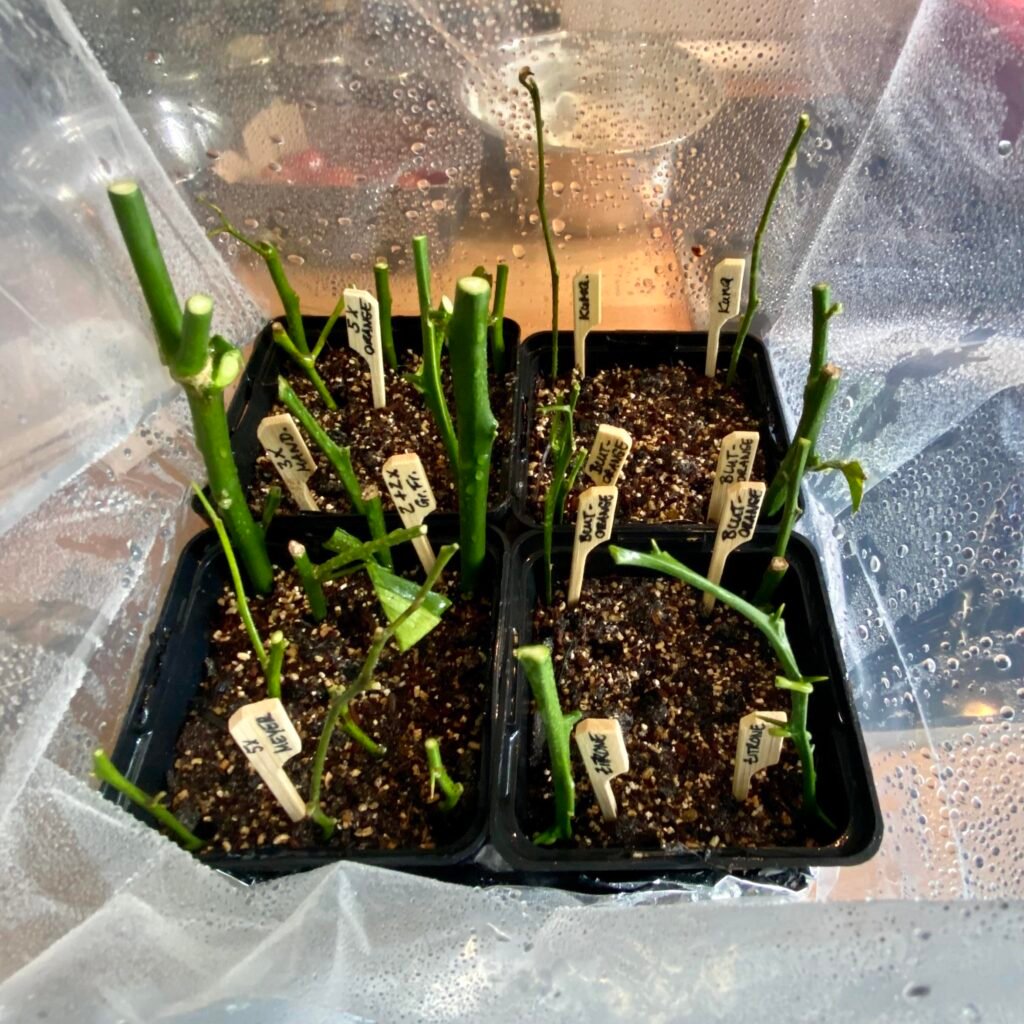
Step 6: Create a Mini Greenhouse for FAST Rooting
This is the MAGIC TRICK that speeds up rooting to just one month!
Cover the pot with:
- A transparent plastic bottle
- A polythene bag
- A small greenhouse dome
This traps moisture and maintains humidity around 80–90%, which citrus cuttings LOVE.
✔ Important:
Make 2–3 small holes in the cover for air circulation.
Place the pot in bright indirect sunlight, not direct sun.
Step 7: Watering and Care During Rooting
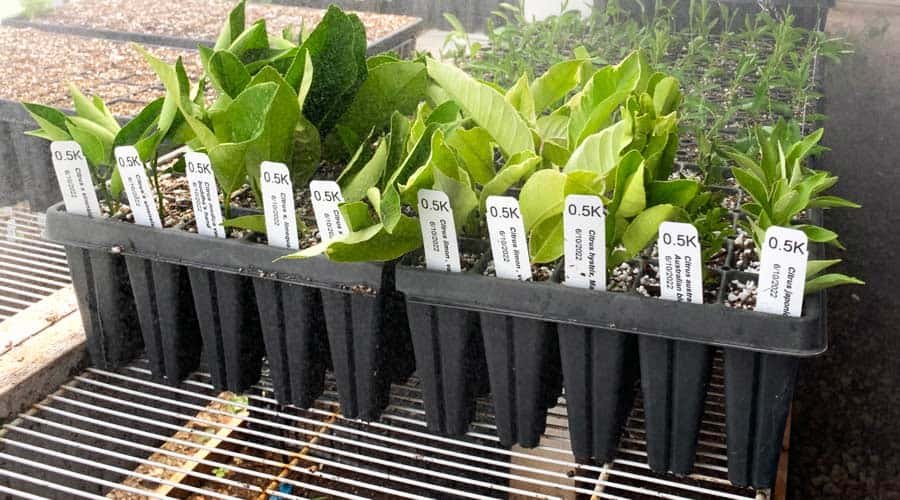
For the next 30 days:
✔ Keep the soil moist, not wet
Water only when the top looks slightly dry.
✔ Do NOT uncover frequently
Opening the dome loses humidity.
✔ Avoid direct sunlight
It can heat up the mini greenhouse and burn the cutting.
✔ Check for fungus
If you see white mold, open the cover for 1 hour.
How to Know Your Citrus Cutting Has Rooted?
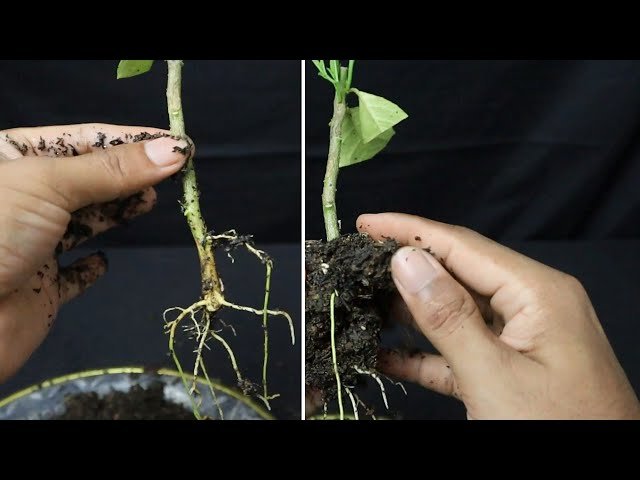
After 4 weeks, you will see:
✔ New leaf growth
✔ Cutting becomes firm
✔ Resistance when you gently pull
✔ New buds forming
These signs indicate strong root formation.
Step 8: Transplanting Your New Citrus Plant
Once the cutting has rooted well:
✔ Slowly open the greenhouse cover over 3–4 days
This helps the plant adapt to outside humidity.
✔ Move to a bigger pot (8–12 inches)
Use rich soil:
- 40% garden soil
- 30% compost
- 20% cocopeat
- 10% sand
✔ Place in partial sunlight for the first week
After that, full sunlight is perfect.
Step 9: Feed Your New Plant for Fast Growth
Citrus plants are heavy feeders.
Use these every 15–20 days:
✔ Vermicompost
✔ Banana peel fertilizer
✔ Cow manure
✔ Seaweed extract
✔ Epsom salt (once a month)
This boosts leaves, roots, and future fruiting.
Extra Tips for Super-Fast Citrus Growth
🌱 Tip 1: Prune early
This encourages a bushy, productive shape.
🌱 Tip 2: Remove flowers for the first 3 months
Let the plant focus on growth.
🌱 Tip 3: Keep in full sunlight
Citrus needs at least 6–7 hours of sunlight.
🌱 Tip 4: Prevent pests
Use neem oil spray monthly.
Common Mistakes That Slow Down Rooting
❌ Planting in heavy soil
❌ Overwatering
❌ Using weak cuttings
❌ Keeping the pot in dark areas
❌ Exposing the mini-greenhouse to extreme heat
Avoid these to ensure 100% success.
Final Thoughts
Propagating citrus trees in just one month is absolutely possible when you combine:
✨ The right cutting
✨ A humid environment
✨ Good soil mix
✨ Proper care
This simple method works beautifully for lemon, orange, lime, kinnow, and mosambi. Once rooted, your citrus plant grows rapidly and can fruit within a couple of years.