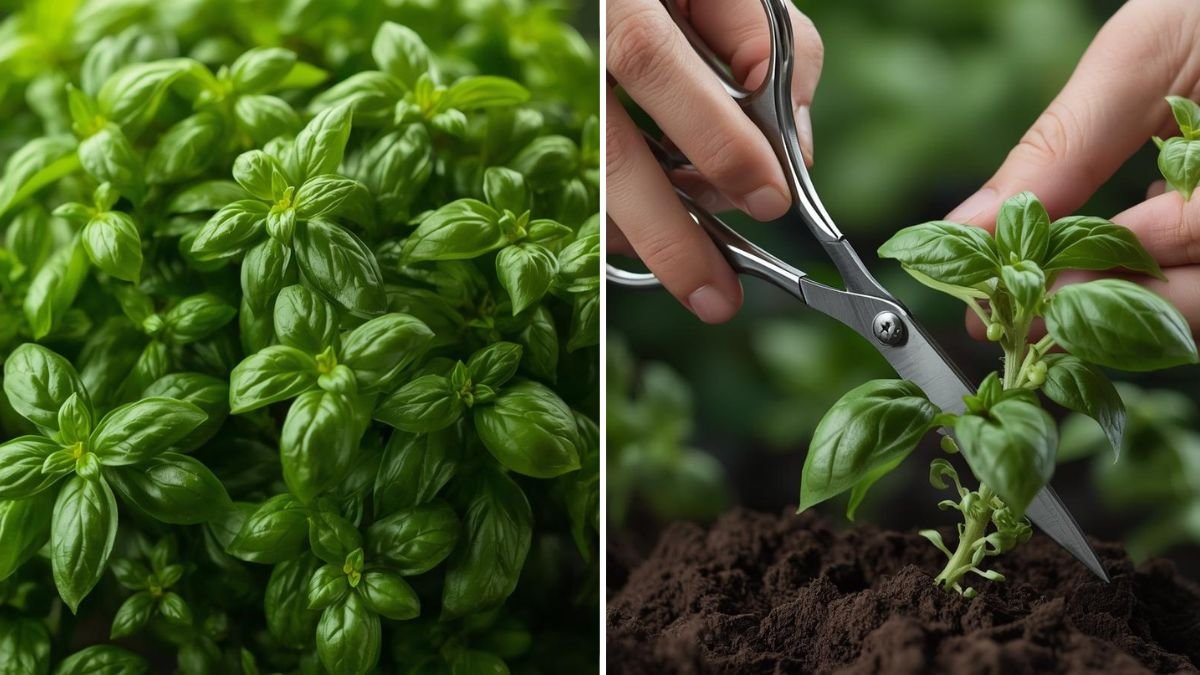
Basil is one of the most popular culinary herbs grown in home gardens due to its fresh aroma and versatile flavor. Many gardeners unknowingly shorten the life of their basil plants by harvesting incorrectly. Proper cutting techniques not only increase leaf production but also encourage bushy, compact growth. When basil is cut the right way, it produces more side shoots and stays productive for a longer period. Incorrect cutting can lead to tall, weak plants with fewer leaves. Understanding how basil grows helps gardeners harvest confidently. This guide explains step-by-step methods for cutting basil leaves properly. With correct care, basil plants remain lush and flavorful throughout the season.
Understanding Basil Growth Patterns and Node Structure
Basil plants grow upward from a central stem with sets of leaves forming at nodes. Each node contains dormant buds capable of producing new branches. When the top growth is cut above a node, the plant redirects energy to side shoots. This natural response creates a bushier shape. Cutting below the node removes future growth points. Recognizing nodes is essential for proper harvesting. Healthy basil plants respond quickly to correct pruning. Understanding this growth habit leads to higher yields. Knowledge of structure is the foundation of effective basil care.
When Is the Best Time to Cut Basil Leaves
Timing plays a critical role in successful basil harvesting. Basil should be cut once the plant reaches six to eight inches tall. Early harvesting prevents legginess and encourages branching. Morning is the best time to cut basil for maximum flavor. Essential oils are strongest before the heat of the day. Avoid cutting during extreme heat or stress. Regular harvesting every one to two weeks maintains growth. Proper timing keeps basil plants productive and aromatic.
Identifying the Correct Spot to Cut Basil Stems
The correct cutting point is just above a leaf node where two sets of leaves emerge. Cutting above this point allows two new stems to grow. Always leave at least two sets of leaves on the plant. This ensures continued photosynthesis and energy production. Avoid cutting too close to the soil. Sharp, clean cuts prevent disease. Proper cutting points maximize regrowth potential. Precision improves plant health and appearance.
How Much Basil to Harvest at One Time
Harvesting too much basil at once can stress the plant. A general rule is to remove no more than one third of the plant. This allows the basil to recover quickly. Small, frequent harvests are better than large removals. Regular cutting encourages consistent growth. Overharvesting leads to slow recovery. Balanced harvesting supports long-term productivity. Moderation ensures healthy basil plants.
Using the Right Tools for Cutting Basil
Clean and sharp tools are essential for harvesting basil. Scissors or garden pruners work best for clean cuts. Dull tools can crush stems and cause damage. Always sanitize tools before use. This prevents the spread of disease. Hand pinching is suitable for small harvests. Proper tools improve accuracy and plant health. Good habits protect basil plants.
Encouraging Bushy Growth Through Regular Pruning
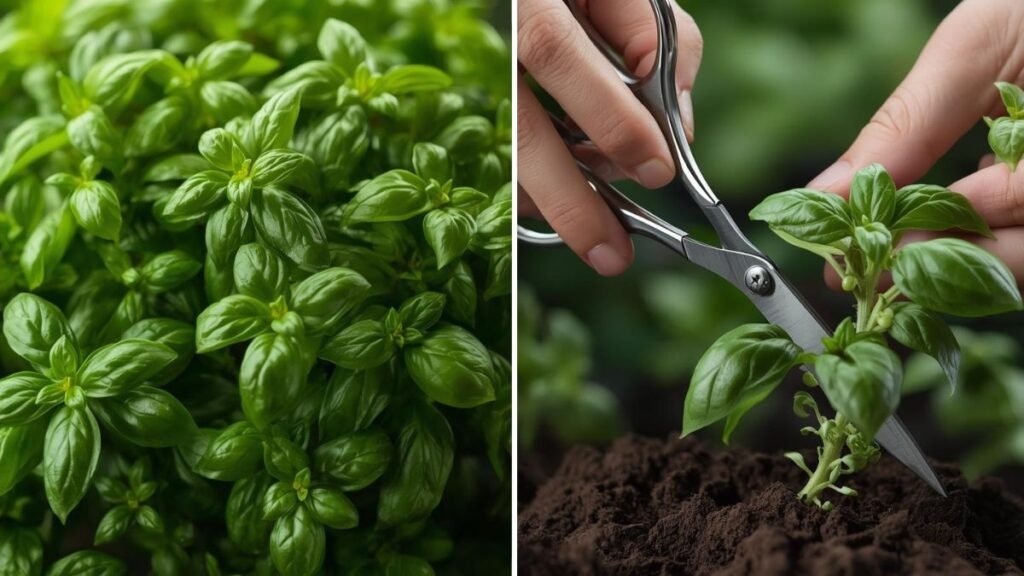
Regular pruning keeps basil plants compact and bushy. Cutting the main stem promotes side branch development. Repeated harvesting trains the plant to grow outward. Bushy plants produce more leaves overall. Regular pruning also improves airflow. This reduces the risk of fungal diseases. Consistent pruning leads to stronger stems. A well-shaped basil plant is more productive.
Preventing Basil from Flowering Too Early
Flowering signals the end of basil leaf production. Once basil flowers, leaf flavor declines. Cutting flower buds early redirects energy to leaf growth. Regular harvesting delays flowering. Inspect plants weekly for buds. Removing buds extends the harvest season. Flower prevention improves leaf quality. Active management keeps basil usable longer.
Watering and Feeding After Cutting Basil
Proper care after harvesting helps basil recover quickly. Water the plant deeply after cutting. Moist soil supports new growth. Avoid waterlogging, which damages roots. Light fertilization promotes leaf production. Organic compost or diluted liquid fertilizer works well. Post-harvest care strengthens plants. Recovery care ensures continuous harvests.
Table Basil Cutting and Care Guide
Cutting height above leaf node leaving two leaf sets Harvest amount no more than one third of plant Best time morning before heat Tool type clean scissors or pruners Post care water deeply light feeding
Common Mistakes to Avoid When Cutting Basil
Many gardeners cut basil incorrectly without realizing it. Cutting too low removes growth points. Harvesting too late causes legginess. Ignoring flower buds reduces leaf quality. Using dirty tools spreads disease. Overharvesting weakens plants. Learning from mistakes improves results. Awareness leads to healthier basil plants.
Growing Basil Indoors and Cutting Techniques
Indoor basil requires similar cutting methods as outdoor plants. Adequate light is essential for regrowth. Rotate plants for even exposure. Cut above nodes as usual. Indoor basil grows slower, so harvest gently. Avoid cold drafts near windows. Consistent care keeps indoor basil productive. Indoor pruning supports steady growth.
Seasonal Basil Harvesting Strategies
Basil growth varies with seasons. Summer requires frequent harvesting. Spring and fall growth is slower. Adjust cutting frequency accordingly. Avoid heavy harvesting in cooler weather. Protect basil from cold stress. Seasonal awareness improves plant health. Adaptation ensures year-round success.
Propagating Basil from Cuttings
Cut basil stems can be used for propagation. Place healthy cuttings in water. Roots develop within one to two weeks. Transplant rooted cuttings into soil. Propagation increases basil supply. This method saves money. Healthy cuttings produce strong plants. Sharing basil becomes easy.
Benefits of Proper Basil Cutting for Flavor
Proper harvesting improves basil flavor and aroma. Young leaves are more tender and flavorful. Regular cutting prevents bitterness. Healthy plants produce higher oil content. Flavor consistency improves cooking results. Proper care enhances culinary value. Fresh basil tastes better when managed well. Good technique rewards gardeners.
Long Term Basil Plant Maintenance
Long-term basil care involves regular cutting and feeding. Monitoring plant health prevents problems. Proper spacing improves airflow. Mulching conserves moisture. Removing damaged leaves reduces disease. Ongoing care sustains productivity. Basil thrives with attention. Long-term care ensures abundant harvests.
Using Harvested Basil Efficiently
Fresh basil should be used or stored properly. Short-term storage works best in water. Refrigeration may cause browning. Basil can be dried or frozen. Efficient use prevents waste. Fresh herbs enhance meals. Proper handling preserves flavor. Harvesting wisely maximizes benefits.