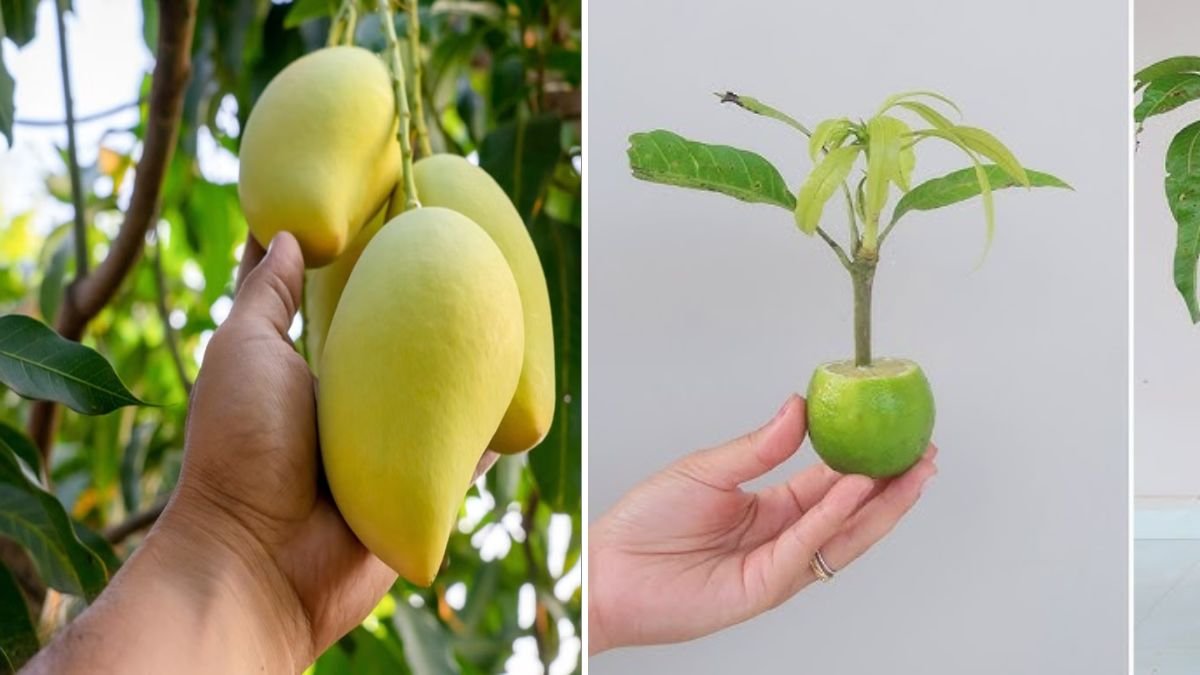
Mangoes are often called the king of fruits, and for good reason. With their sweet aroma, juicy flesh, and vibrant flavour, mangoes have earned a special place in gardens across tropical and subtropical regions. Growing your own mango tree at home is not only rewarding but also surprisingly easy when you understand the right techniques.
Whether you want to grow a mango tree from seed, propagate it through cuttings, or plant a grafted sapling, this comprehensive guide will walk you through every step. By the end, you’ll know how to nurture a healthy mango tree that produces delicious fruits year after year.
In this 1200-word article, we explore how to grow mango trees, the best growing conditions, care tips, common mistakes, and propagation methods.
Let’s begin your mango-growing journey!
1. Introduction: Why Grow Mango Trees at Home?
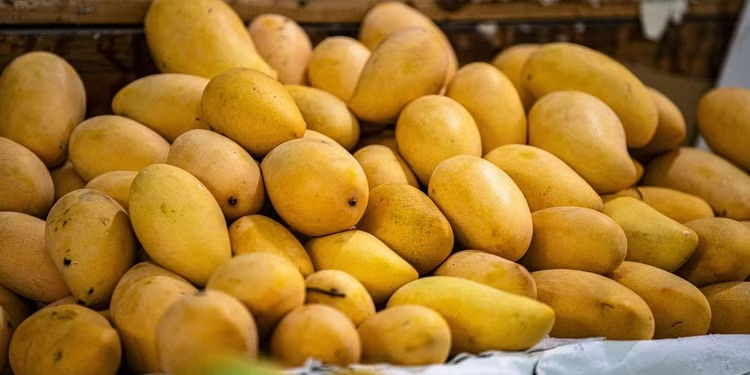
Growing mango trees offers many benefits:
- Fresh organic fruits
- Natural shade
- Low maintenance
- Beautiful foliage
- Long lifespan (50+ years)
- Increases property value
- Provides a rewarding hobby
A healthy mango tree can produce hundreds of fruits every season, making it one of the best fruit trees for home gardens.
2. Choosing the Right Mango Variety
There are hundreds of mango varieties. Some popular ones include:
- Alphonso (sweet, aromatic)
- Kesar (golden colour)
- Dasheri (juicy, fragrant)
- Himsagar (smooth, sweet)
- Langra (sharp flavour)
- Totapuri (fibrous, good for juice)
For beginners, grafted varieties are recommended because they:
- Fruit faster
- Have better quality
- Are disease-resistant
- Grow more uniformly
3. Methods to Grow Mango Trees
You can grow mango trees in three ways:
1. From seed (slow and unpredictable)
Produces a new variety; may take 6–10 years to fruit.
2. From cuttings (moderate success)
Rarely used for mango but possible.
3. From grafting (best method)
Produces true-to-type plants and fruits in 2–4 years.
Most home gardeners use grafted saplings because they fruit faster.
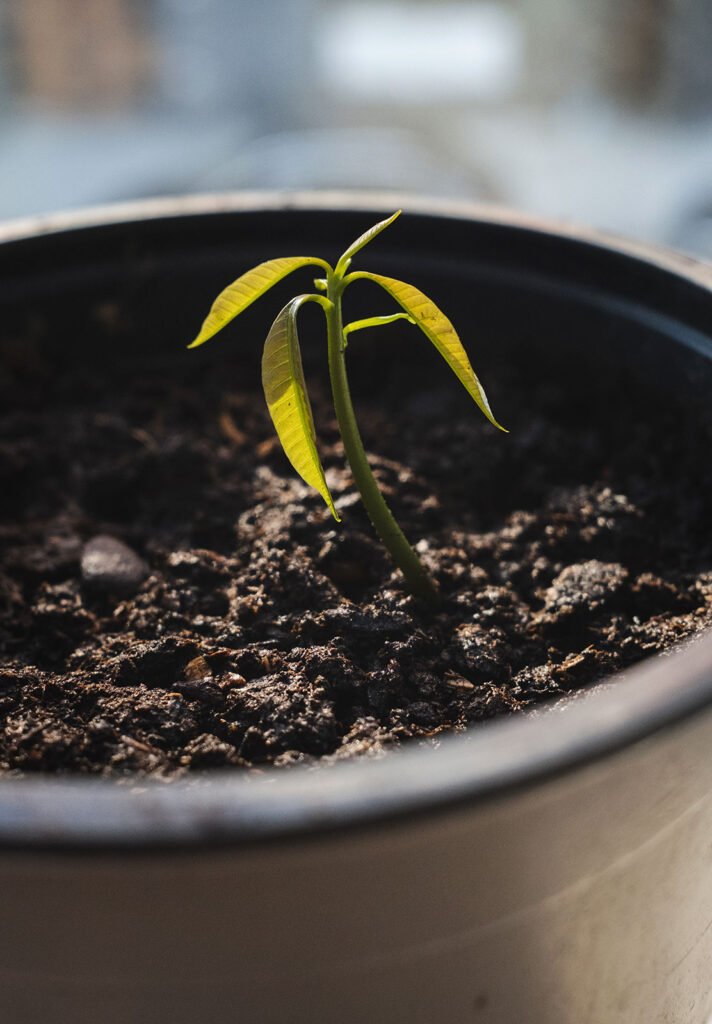
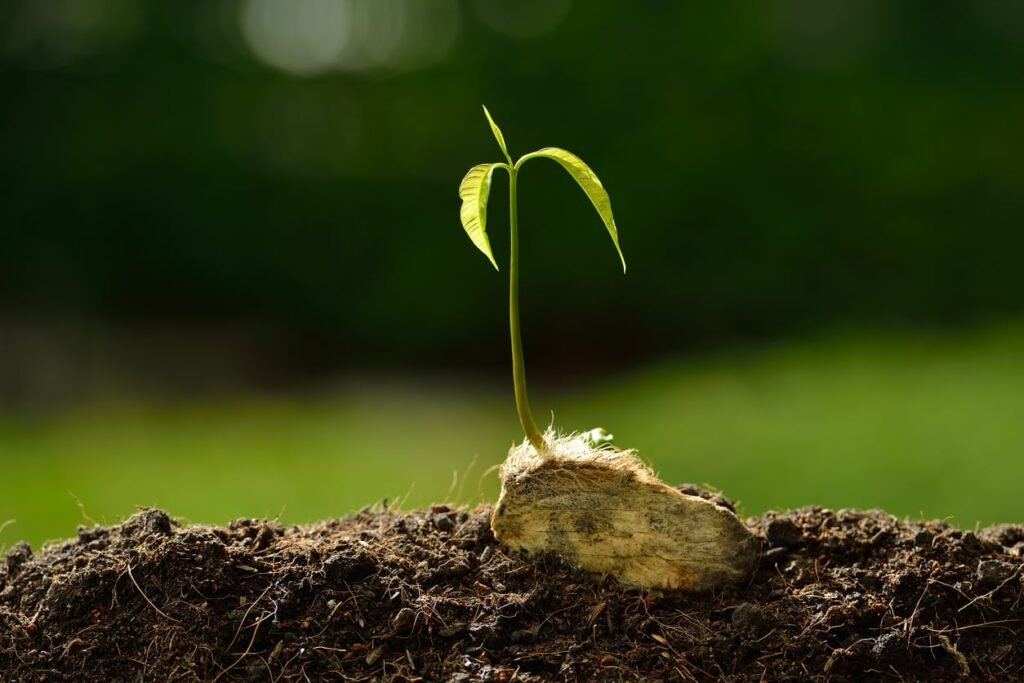
4. Growing Mango From Seed (Step-by-Step)
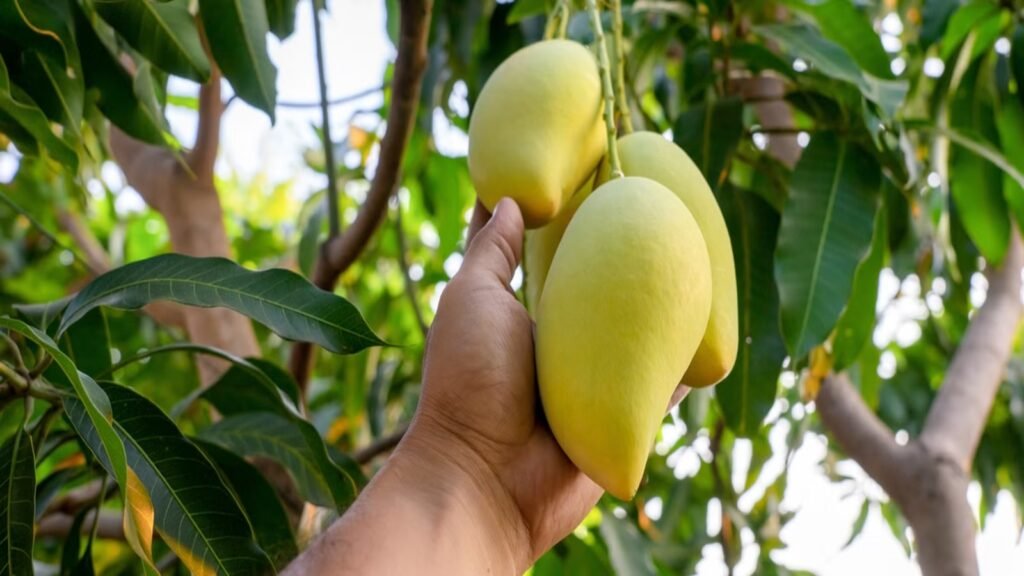
Growing from seed is fun but slow.
Step 1: Choose a ripe mango
Select a fresh fruit with a healthy seed.
Step 2: Clean the seed
Remove pulp carefully.
Step 3: Dry for 1–2 days
Let the seed dry slightly.
Step 4: Crack open the husk
Use a knife gently.
Step 5: Plant the seed
Plant in soil with:
- Good drainage
- Organic matter
- Sand
Place the seed horizontally or slightly tilted.
Step 6: Water lightly
Keep soil moist—not soggy.
Step 7: Provide sunlight
At least 6 hours per day.
Germination happens in 2–4 weeks.
5. Growing Mango From a Grafted Sapling
This is the best and most common method.
Steps:
- Buy a healthy grafted sapling
- Choose a sunny spot
- Dig a hole (60 × 60 cm)
- Add compost
- Place sapling
- Fill soil
- Water
- Mulch
Grafted plants fruit in 2–4 years, much faster than seedlings.
6. Ideal Conditions for Mango Growth
Sunlight
- Full sun
- At least 6–8 hours
Temperature
- Warm climate
- 25–35°C ideal
Soil
- Sandy loam
- Well-drained
- Slightly acidic
- Rich in organic matter
Water
- Moderate
- Avoid waterlogging
7. Watering Requirements
Young trees:
- Water every 2–3 days
Mature trees:
- Once a week
- During fruiting, water slightly more
Avoid:
- Standing water
- Overwatering
- Wet roots
8. Fertilizing Your Mango Tree
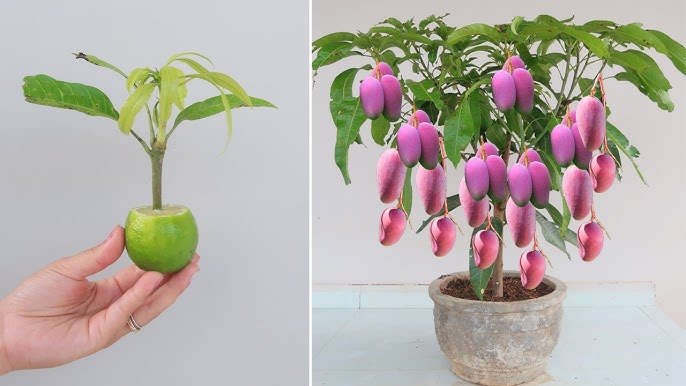
Feed your tree regularly.
During growth
- Compost
- Vermicompost
- Neem cake
- Fish meal
During flowering
Use NPK (10-10-10)
During fruiting
Use potassium-rich fertilizers.
9. Pruning Mango Trees
Pruning:
- Removes dead branches
- Improves airflow
- Encourages fruiting
- Controls height
Best time:
- Late winter
- Early spring
Cut:
- Crossing branches
- Weak tips
- Diseased wood
10. Pest and Disease Management
Common mango pests:
- Fruit flies
- Aphids
- Mealybugs
- Scale insects
Solutions:
- Neem oil
- Soap spray
- Sticky traps
- Clean garden
Common diseases:
- Powdery mildew
- Anthracnose
- Bacterial black spot
Prevent by:
- Proper pruning
- Good airflow
- Avoid overhead watering
- Clean tools
11. Flowering and Fruit Formation
Mango trees flower in:
- Late winter
- Early spring
Flowers are:
- Small
- Yellow
- Produced in clusters
After pollination:
- Fruits develop
- Growth continues for 3–5 months
12. How to Improve Flowering
Tips:
- Prune lightly
- Reduce watering before flowering
- Apply potassium
- Remove excess fruits
- Ensure sunlight
Healthy trees produce more flowers.
13. When and How to Harvest Mangoes
Harvest when:
- Skin turns yellow or orange
- Fruit smells sweet
- Slight softness
Use sharp scissors.
Do not pull — you may damage the branch.
14. How to Ripen Mangoes at Home
To ripen:
- Keep at room temperature
- Use a paper bag
- Add a banana (produces ethylene)
Ripening time:
- 2–4 days
15. Caring for Young Mango Trees
Young trees need:
- Protection from sun
- Regular watering
- Mulching
- Support sticks
- Organic fertilizer
Avoid:
- Strong winds
- Heavy pruning
- Waterlogging
16. Caring for Mature Mango Trees
Mature trees:
- Need less frequent watering
- Require annual pruning
- Benefit from compost
- Produce heavy fruits
Mulch helps retain soil moisture.
17. Common Mistakes to Avoid
Overwatering
Planting in shade
Poor drainage
Not pruning
Ignoring pests
Using chemical fertilizers excessively
Not selecting grafted saplings
Avoiding these mistakes makes a huge difference.
18. Tips for a Healthy Mango Tree
Plant in full sun
Mulch regularly
Use organic fertilizers
Prune annually
Monitor pests
Water deeply but infrequently
Keep soil loose
Choose grafted plants
These habits guarantee healthy growth.
19. How Long Does a Mango Tree Take to Fruit?
- From seed → 6–10 years
- From cuttings → 4–6 years
- From grafting → 2–4 years
Grafting saves many years.
20. Conclusion: Growing Mango at Home Is Rewarding and Easy
Growing mango trees at home is a fulfilling experience. With the right variety, proper care, and patience, you can enjoy fresh, aromatic mangoes from your own garden. Whether you choose seeds or grafted saplings, mango trees reward gardeners with beauty and delicious fruits for decades.
Mango trees thrive in warm climates, require sunlight, and benefit from organic care. By following the techniques in this guide — planting, watering, fertilizing, pruning, and pest control — you can grow a strong, productive tree.