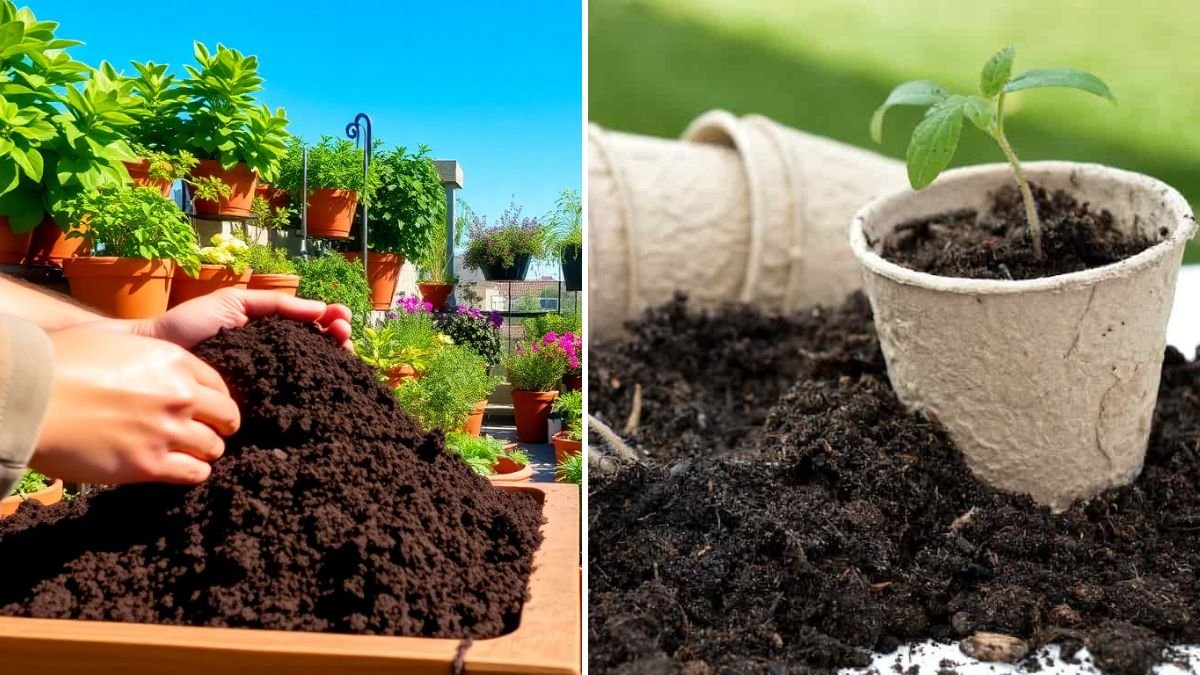
Container gardening is a revolutionary way to grow fresh vegetables, herbs, and flowers, even if you don’t have a large garden or backyard. One of the most critical factors for success is the soil mix. Unlike open-ground gardening, container plants rely entirely on the soil you provide. The right soil mix ensures proper drainage, aeration, nutrient availability, and root health, which leads to stronger plants, bigger yields, and healthier growth.
In this comprehensive guide, we will cover everything you need to know about making the perfect soil mix for containers and small spaces, including ingredients, proportions, additives, and tips for different types of plants.
Why the Right Soil Mix Matters
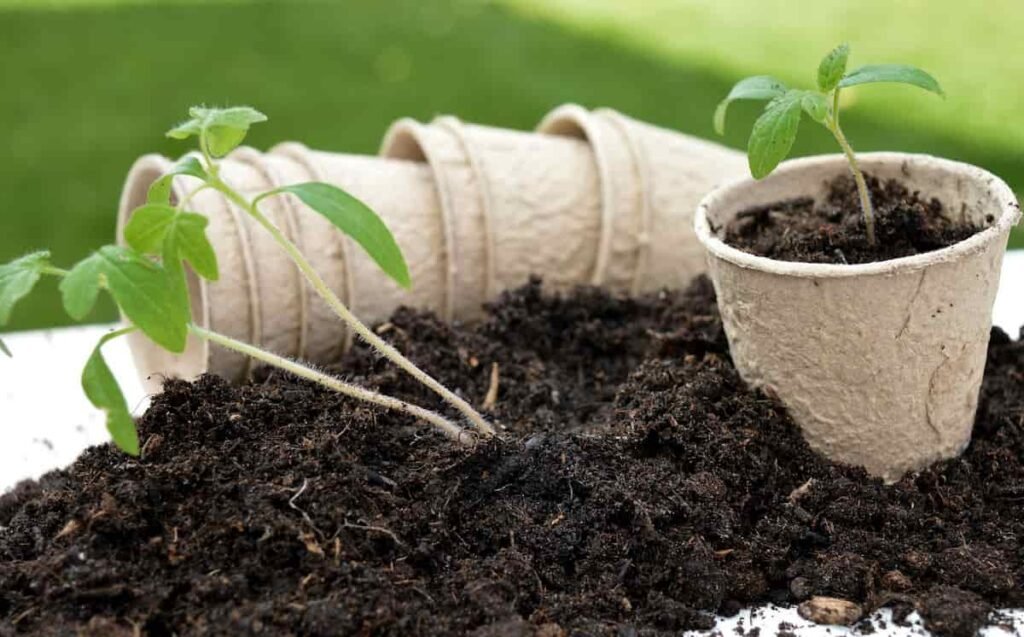
Plants in containers don’t have access to natural soil ecosystems. Using garden soil alone often leads to:
- Poor drainage
- Compacted roots
- Nutrient deficiencies
- Waterlogging or root rot
The perfect soil mix solves these problems by providing:
- Good drainage – prevents waterlogging and root rot.
- Proper aeration – allows roots to breathe and grow strong.
- Nutrient-rich environment – supports fast growth and abundant harvests.
- Lightweight structure – easy to move and manage, especially in small spaces.
Step 1: Choosing the Right Base Material
The foundation of any good container soil mix starts with a light, fertile, and well-draining base. Common options include:
1. Garden Soil
- Use sandy loam soil if possible.
- Avoid clay-heavy soil; it compacts easily and retains too much water.
- Sterilize garden soil by baking it in the sun or in an oven to kill pests and pathogens.
2. Cocopeat / Coconut Coir
- Lightweight and retains moisture well.
- Provides good aeration for roots.
- Ideal for vegetables, herbs, and flowers.
3. Compost
- Well-decomposed organic compost provides nutrients and beneficial microbes.
- Use cow dung compost, vermicompost, or kitchen compost.
- Avoid fresh manure—it may burn plants and attract pests.
Step 2: Adding Aeration and Drainage Materials
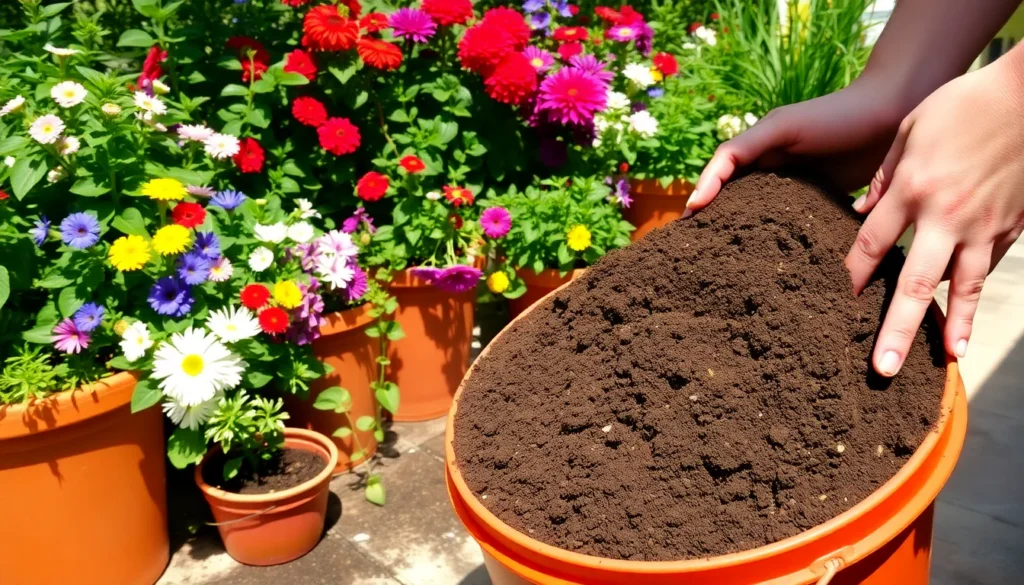
Container plants need roots to breathe. Adding aeration and drainage materials prevents compaction and ensures water flows evenly.
Options:
- Perlite – volcanic glass, lightweight, excellent for aeration.
- Vermiculite – improves water retention while keeping soil light.
- Sand – coarse sand improves drainage.
- Rice hulls – organic, improves aeration and reduces fungal issues.
Tip: A mix of 10–20% aeration material works well for most container plants.
Step 3: Choosing Nutrient-Rich Additives
To support healthy growth, add nutrient boosters to your mix:
Essential Additives:
- Bone meal – high in phosphorus for strong roots and flowering.
- Wood ash – potassium-rich, improves flowering and fruiting.
- Neem cake – organic pest deterrent and nutrient source.
- Vermicompost – supplies nitrogen, phosphorus, potassium, and beneficial microbes.
Mix these evenly to avoid “hot spots” that could harm young roots.
Step 4: Determining the Right Proportions
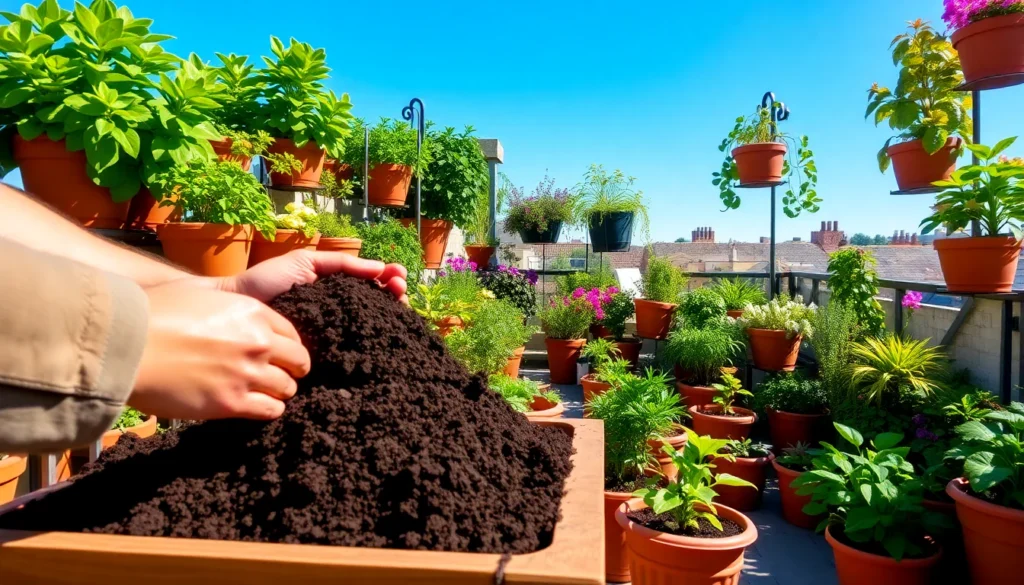
Here’s a balanced container soil mix suitable for vegetables, herbs, and flowers:
| Ingredient | Proportion |
|---|---|
| Garden soil or cocopeat | 40% |
| Compost / Vermicompost | 30% |
| Perlite / Vermiculite / Sand | 20% |
| Nutrient additives (bone meal, neem cake, wood ash) | 10% |
Tip: Adjust proportions slightly based on plant type.
- Leafy greens: More compost for nitrogen.
- Flowering/fruiting plants: More bone meal and wood ash for phosphorus and potassium.
Step 5: Mixing the Soil Properly
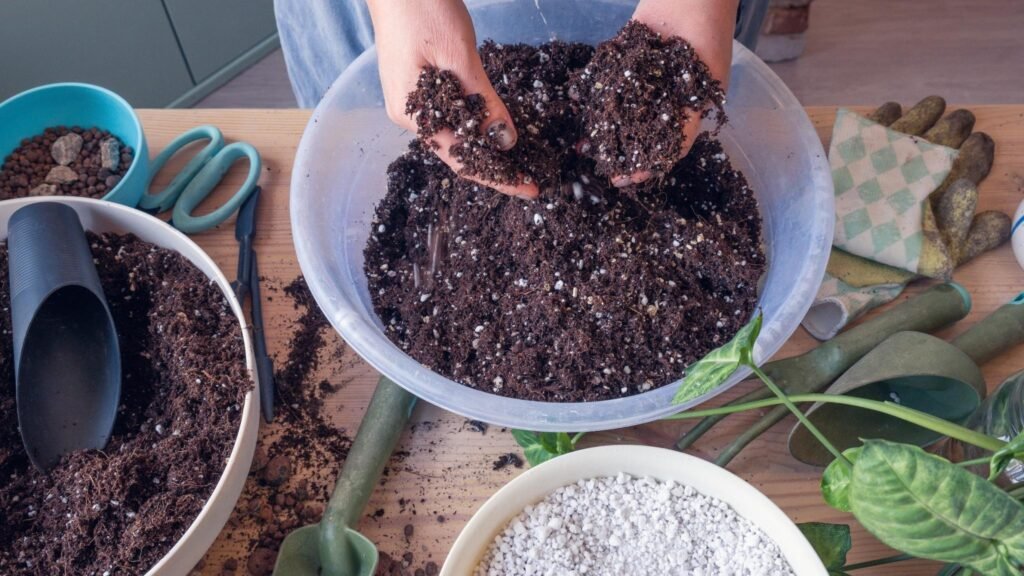
A good soil mix is uniform in texture and nutrients. Follow these steps:
- Spread the base materials on a clean surface.
- Add compost and nutrient additives.
- Mix thoroughly using a garden spade or hands (wear gloves).
- Check texture – it should be loose, crumbly, and not clump together.
- Moisten lightly – soil should feel damp, not soggy.
Step 6: Filling Containers
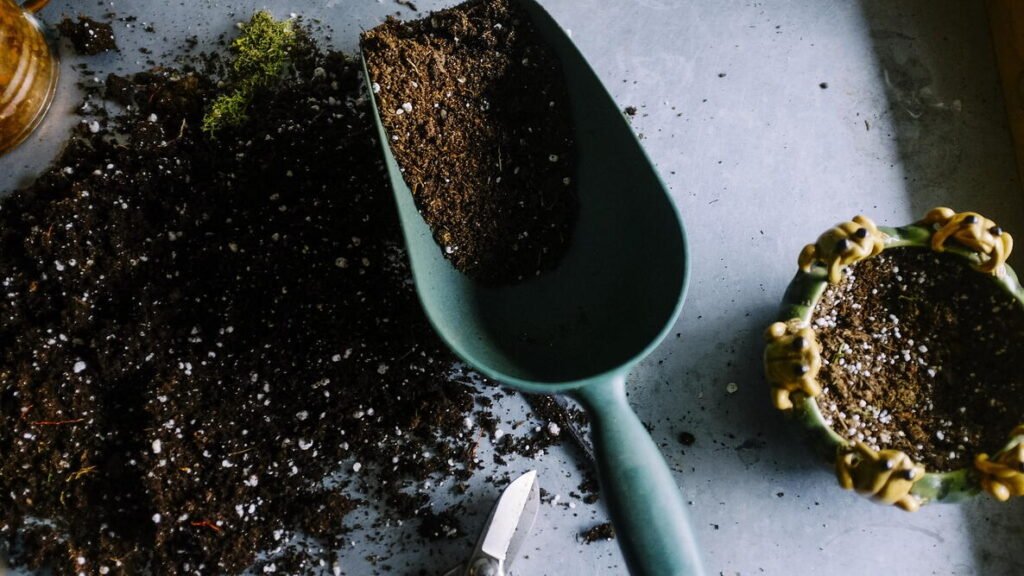
Once the soil mix is ready:
- Fill containers leaving 1–2 inches from the rim.
- Press lightly but avoid compacting the soil.
- Create a small depression in the center for seedlings or seeds.
- Water gently to settle the soil.
Tip: Use containers with drainage holes to prevent waterlogging.
Step 7: Choosing Plants for Your Soil Mix
This universal soil mix works for a wide range of plants:
Vegetables
- Lettuce, spinach, kale
- Tomatoes, peppers, eggplants
- Radishes, carrots (ensure deeper containers)
Herbs
- Basil, mint, rosemary, thyme
- Coriander, parsley, chives
Flowers
- Marigold, petunia, geranium
- Sunflowers, zinnias
Tip: Adjust nutrient additives based on plant type. Leafy vegetables need more nitrogen; flowers and fruiting plants benefit from phosphorus and potassium.
Step 8: Watering and Fertilizing Container Plants
Even with a perfect soil mix, container plants need proper watering and feeding.
Watering Tips:
- Water when the top 1–2 inches of soil feels dry.
- Avoid overwatering; excess water reduces oxygen to roots.
- Mulch the soil surface to retain moisture and prevent algae growth.
Fertilizing Tips:
- Liquid organic fertilizer every 10–14 days for continuous growth.
- Slow-release fertilizer at planting time helps feed plants for several weeks.
- Use compost tea or vermiwash for a gentle nutrient boost.
Step 9: Preventing Common Problems
Even with good soil, container plants can face issues. Here’s how to prevent them:
1. Root Rot
- Cause: Poor drainage, overwatering
- Solution: Ensure drainage holes, use perlite or sand, avoid waterlogging
2. Nutrient Deficiency
- Cause: Soil exhausted over time
- Solution: Top dress with compost or liquid fertilizer every few weeks
3. Soil Compaction
- Cause: Heavy watering, dense soil
- Solution: Aerate soil gently, add perlite or cocopeat
4. Pests
- Cause: Stagnant water or poor airflow
- Solution: Neem oil, good airflow, and proper drainage
Step 10: Tips for Small Space Gardening
For gardeners with limited space:
- Vertical containers: Stack pots or use hanging baskets.
- Succession planting: Refill soil and plant new crops as soon as one is harvested.
- Reuse soil: Remove old roots, mix with fresh compost, and refill containers.
- Lightweight soil: Use cocopeat and perlite to make pots easy to move.
- Companion planting: Mix herbs with vegetables to save space and deter pests.
Final Thoughts: The Key to Thriving Container Gardens
The perfect soil mix is the foundation of successful container gardening. With the right balance of drainage, aeration, and nutrients, your plants will grow strong, healthy, and productive. By following this guide, even gardeners with small spaces or urban balconies can enjoy abundant vegetables, fresh herbs, and colorful flowers throughout the year.
Remember: container gardening is not just about soil—it’s about creating a miniature ecosystem where roots breathe, nutrients flow, and plants thrive. With a well-prepared soil mix, consistent care, and proper watering, your small-space garden can yield big rewards, one pot at a time.